










































































Verified Platforms
Quick Links
Where to Stay Secure
Thank you! Your submission has been received!
Oops! Something went wrong while submitting the form.


Part 1 showed the machinery — the symmetry, the fracture, the shadow.
But understanding impermanent loss isn’t complete until you see what happens when the system meets a real market.
This is where theory stops being safe.
In Part 2, the concepts you learned are stress-tested.
BTC surges. ETH lags. The pool bends. The shadow widens. Fees flow. Value shifts.
And suddenly the question isn’t what impermanent loss is —
it’s what it does to you.
This is the moment when Tao begins to understand why some people profit, why others lose, and why yield exists at all.
And it’s the moment when you’ll see clearly whether liquidity provision is a tool you want — or a structure you’d rather observe from a distance.
If Part 1 opened the door,
Part 2 shows what walks through it.
The Observatory lights dimmed further as the hour slipped past midnight.
Only the screen remained illuminated — two assets, two curves, drifting in quiet disagreement.
Ava pulled another sheet forward, and this time she added two labels beside the shaded diagram:
BTC
ETH
Tao raised an eyebrow.
“Real tokens?” he asked.
“We need something concrete now,” Ava said. “Something you can feel. Let’s use BTC and ETH — a pair the system knows well. Their story will make the shadow sharper.”
She drew two simple starting points — equal value deposits.
“Imagine,” she said, “you enter a BTC/ETH pool when both assets sit at a calm ratio: one BTC worth, say, fifteen ETH. You deposit equal value — half in BTC, half in ETH. The pool accepts your symmetry, locks you into its equation, and opens trading.”
Tao nodded.
“This is the beginning. The moment before anything changes.”
“Exactly,” Ava replied. “Now we follow two paths. The world outside — and the world inside the pool.”
Ava tapped the page.
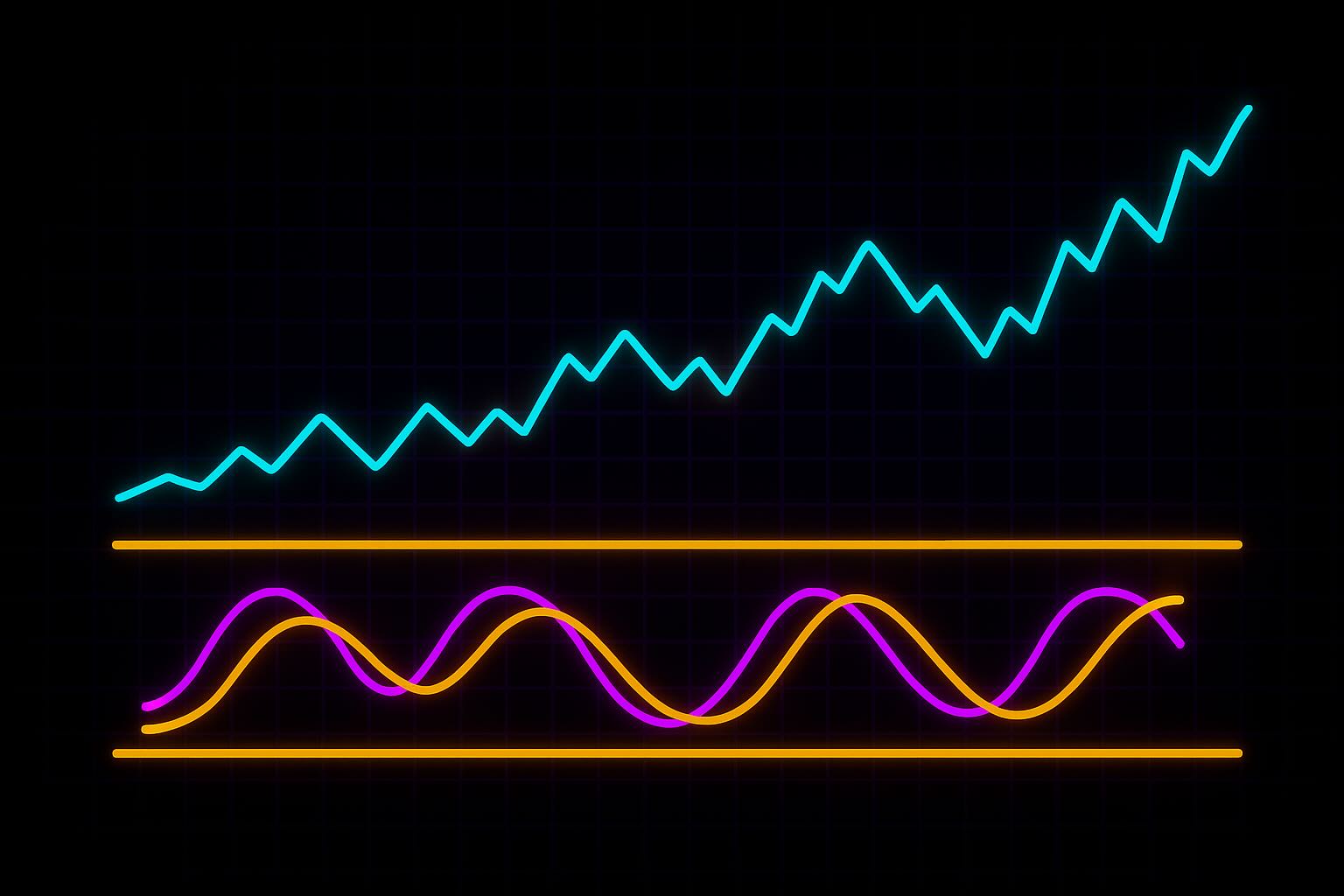
“Let’s say BTC rallies. Hard. One BTC climbs from fifteen ETH to twenty. The world celebrates — Bitcoin dominance rising, momentum turning, narratives shifting.”
Tao imagined it.
He’d seen it before — charts lighting up across feeds, the slow crush of capital rotating.
“If you stayed outside the pool,” Ava continued, “your BTC simply rides the wave. One BTC becomes worth more ETH. Your ETH stays your ETH. Nothing rearranges itself. You hold what you chose to hold.”
Tao nodded slowly.
“Pure exposure. No reshaping. No symmetry to defend.”
“Correct,” she said. “Outside the pool, your position is yours alone. The market moves; your holdings stay fixed.”
Ava drew the rising BTC line again, but this time she shaped the pool’s response beneath it.
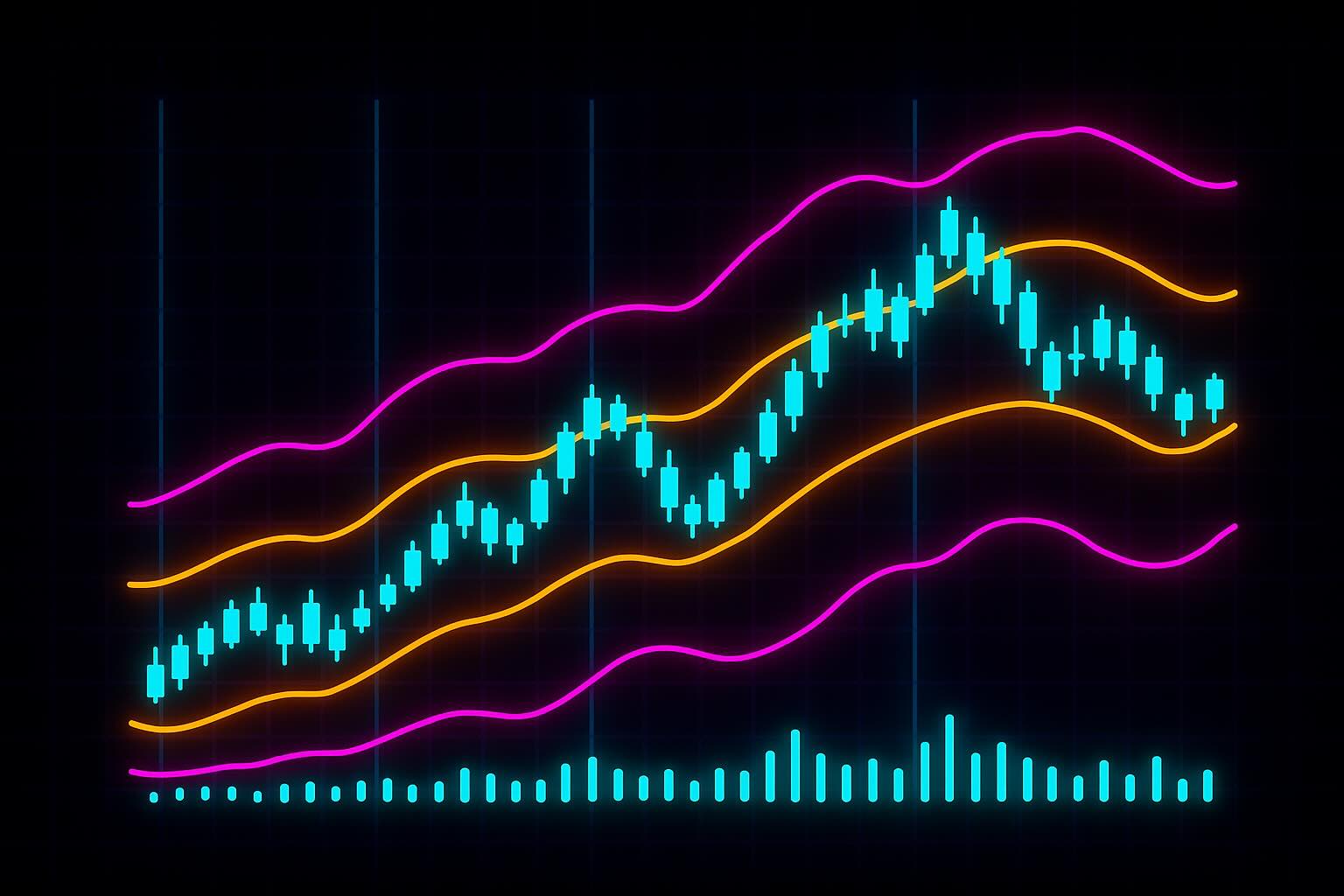
“Now let’s see what happens inside,” she said. “When BTC rises, traders want BTC. They buy it from the pool. And because every buy removes BTC, the pool must compensate — it gives them BTC and absorbs ETH in return.”
Tao felt the shift.
“So the pool loses BTC and gains ETH just as BTC is climbing.”
“Yes,” Ava said softly. “The equation demands it. As BTC becomes more valuable outside, you hold less of it inside. Because the pool is bending — redistributing — to maintain x · y = k.”
She turned the page to reveal a second shaded diagram — the shadow slightly larger now.
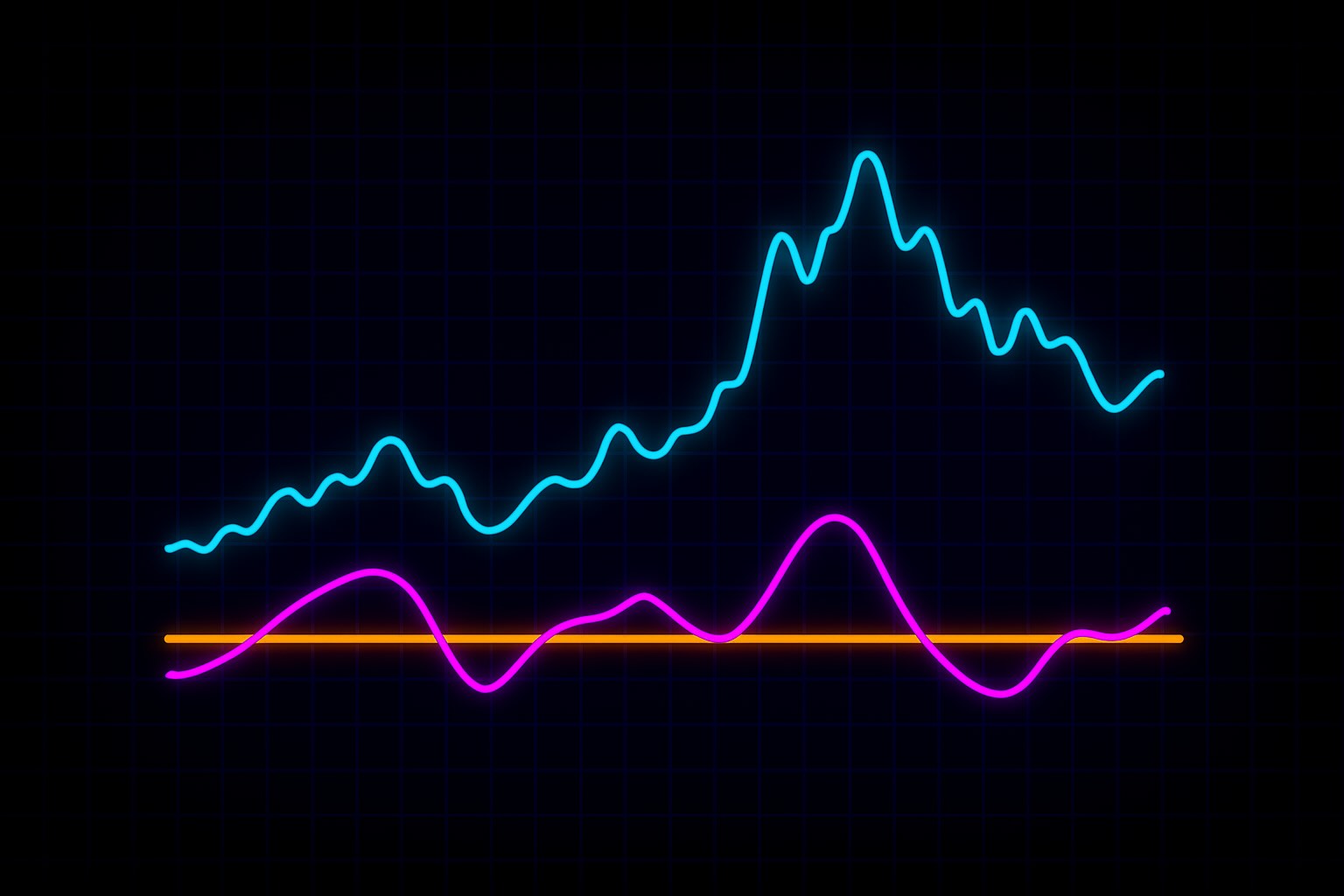
“This,” she said, pointing to the gap, “is the value difference between the BTC/ETH you would have held outside and the BTC/ETH the pool forces you to hold inside.”
Tao exhaled.
“So as BTC rises, I end up with more ETH — the weaker asset — and less BTC — the stronger one.”
“Exactly. You still benefit from the rising price,” Ava said, “but less than you would have. You traded pure exposure for liquidity provision. The shadow deepens.”
Ava leaned back slightly, voice steady.
“Yet this is where nuance matters. Many people think impermanent loss means the pool shrinks. But if volume is high — if thousands trade against your liquidity — the pool itself can grow.”
Tao’s eyes sharpened.
“Grow… how?”
“In fees,” Ava said. “Every trade in the BTC/ETH pool pays a toll. With enough volume, the total value of the pool rises. Your share of it rises too. And sometimes — not always, but sometimes — the growth from volume outpaces the shadow caused by divergence.”
Tao sat with that.
“So impermanent loss is only one side of the story. The other side is the pool’s expansion.”
“Yes,” Ava replied. “Liquidity providers earn yield because they shoulder the pool’s symmetry — they absorb its reshaping. Fees compensate for that burden. Think of it not as loss, but as the cost of enabling a smoother market. And sometimes, the market rewards you more for carrying that burden than divergence takes away.”
Tao stared at the BTC/ETH diagrams, now understanding both the fracture and the compensation.
“So if BTC surges, I lose alignment — that’s the shadow. But if enough traders pass through the pool chasing that move, their fees swell the pool’s size. Two worlds pulling in opposite directions.”
Ava nodded.
“And IL is simply the tension between them.”
Tao tapped the table lightly, a quiet rhythm of realization.
“Outside, you hold your tokens.
Inside, the pool holds you.”
Ava’s lips curved into the faintest smile.
“That is the clearest way to say it. And now that you can see both worlds, the next step is understanding how deep the shadow can run — and why it sometimes barely appears at all.”
She turned a final page.
A new heading waited, crisp and deliberate:
“Chapter 6 — Depth of the Shadow: When Impermanent Loss Is Large — and When It’s Small.”
Ava closed the notebook with care.
“When you’re ready,” she said, “we descend deeper.”
Outside the Observatory window, dawn had not yet touched the horizon.
The world was still dark, still silent — a perfect mirror for the concept Ava was about to reveal.
Tao sat upright, sensing a shift.
“Earlier,” he said, “you showed me the shadow — the gap between the world outside and the world inside the pool. But how deep can that shadow run? How far can the divergence stretch before the system truly bites?”
Ava opened the notebook again.
And this time, she didn’t begin with ratios or diagrams.
She began with a story.
“Imagine,” she said, “our BTC/ETH pool again. Calm market. BTC sitting at fifteen ETH. You deposit equal value — symmetry established.”
Tao nodded.
“And then,” Ava continued, “Bitcoin doesn’t just rise. It erupts. A 3× move. One BTC goes from fifteen ETH to forty-five.”
Tao’s eyes widened — he had lived through moves like that, the sudden violence of momentum.
“If you held your BTC outside the pool,” Ava said, “your one BTC simply becomes worth forty-five ETH. Clean. Direct. No interference. Your exposure does exactly what the market does.”
She paused.
“But inside the pool, the story changes.”
“When BTC begins its climb,” Ava said, “traders buy it from the pool at every step. They drain BTC. They flood the pool with ETH. And because the constant product must hold, the pool responds by giving up more and more BTC as its price rises.”
Tao frowned.
“So while the world moves up, the pool moves away from the asset that’s appreciating.”
“Yes,” Ava replied. “By the time BTC has tripled, the pool holds significantly less BTC and significantly more ETH. You still profit — but you do not get 3×. You get something far smaller.”
She sketched a simple outcome in her notebook:
Outside the pool:
1 BTC → worth 45 ETH
Inside the pool:
Your BTC is mostly sold into ETH during the rise → maybe worth 32–35 ETH depending on the path traders took.
Tao exhaled slowly.
“So you gain… but less than you would have.”
“Yes,” Ava said. “This is impermanent loss in its clearest form. Not a loss of money — a loss of alignment. The pool traded for you. It sold strength to maintain balance.”
Tao looked confused.
“So then how can the pool increase in size? If it’s constantly giving up the winning asset, how can the total value rise?”
Ava turned to a fresh page.
“Because the pool does not live on price alone. It lives on volume. Every trade on the way up pays a fee. And if the rally is violent enough, the fees can swell the pool’s total value more than divergence shrinks it.”
She drew a simple comparison:
“The system is not punishing you,” she said.
“It is paying you for carrying the burden of symmetry.”
Tao shifted in his seat.
“And on the downside?” he asked quietly. “What if BTC collapses instead of surging?”
Ava’s expression didn’t change — calm as always.
“Then the shadow deepens in the opposite direction. If Bitcoin falls to one-third its value — say, from fifteen ETH to five — then ETH becomes the stronger asset.”
“And the pool…?”
“The pool will accumulate BTC,” Ava said. “Buyers sell BTC into the pool as the price falls. The pool gains more of the weaker asset. You end up with far more BTC than you want, and less ETH — the asset that held its ground.”
Tao closed his eyes briefly.
“So on the way up, the pool sells my strength.
On the way down, it buys my weakness.”
Ava nodded.
“That is the nature of symmetry. It never chases momentum. It always pulls toward balance. And that is why liquidity provision is not free. It is service. You stabilize the market, and in return, the market compensates you with fees.”
Ava placed the pen down.
“The shadow is deepest when divergence is greatest,” she said.
“A 3× move, up or down, is not gentle. It is structural stress.”
Tao leaned in.
“So IL is really the distance between the two worlds at their point of maximum disagreement.”
“Yes,” Ava replied. “And that disagreement becomes permanent if the market never returns to the entry ratio. Because the pool cannot return you to your original composition — only the market can close the gap.”
Tao looked at the BTC/ETH diagrams — pumps, dumps, swelling pool size, shrinking alignment — and finally understood the architecture behind the noise.
“So liquidity provision,” he said softly, “is not about predicting moves. It’s about accepting how the system behaves when moves happen.”
Ava closed the notebook, the sound gentle but final.
“And now,” she said, “you are ready for the final step — understanding why people still choose to provide liquidity despite the shadow… and when it becomes a tool instead of a trap.”
She revealed the next title:
Chapter 7 — Yield, Purpose, and the Choice to Enter the Pool.
She met his eyes.
“When you’re ready,” she said, “we finish the piece.”
The first hint of dawn pressed faint silver against the Observatory windows.
Not morning yet — just the suggestion of it.
A fitting hour for the final truth.
Tao sat in stillness, feeling the outline of everything Ava had shown him — divergence, symmetry, the shadow, the two worlds. For the first time, liquidity provision felt like more than a financial mechanic. It felt like a structure with its own temperament, its own philosophy.
But one question remained — the one that drew countless beginners into pools without understanding the system that awaited them.
He looked at Ava.
“If impermanent loss is the shadow,” he said quietly, “then why do people walk into it? Why do they choose the burden at all? We talk about fees… but that can’t be the whole story.”
Ava didn’t answer right away.
She stood, walked to the wall of glass, and watched the faint silver of dawn press a little deeper into the horizon.
When she finally spoke, her voice carried the weight of the entire concept.
“Because symmetry has a cost,” she said, “and the market pays those who are willing to hold it.”
Tao frowned slightly.
“Fees?”
“Fees,” Ava nodded, “are the surface. The simplest reward. Each trade pays a toll. When markets churn — when momentum surges, when panic spills — liquidity providers earn because they make movement possible. But that is only one layer.”
She turned back to him.
“Most people don’t enter for fees alone. Many enter for yield — the APY, the incentives, the token rewards. Protocols know that symmetry is a burden. So they pay people to shoulder it.”
Tao inhaled slowly.
“So yield isn’t a bonus. It’s compensation.”
“Yes,” Ava said. “Liquidity incentives exist because the structure of the pool tilts against the provider. Without reward, no one would hold balance while the world breaks it.”
She moved closer, her steps quiet on the polished floor.
“But there’s a second truth — the one that pulls people in even when they know the shadow is real.”
Tao leaned forward.
“What truth?”
“That sometimes,” Ava said, “yield is the point. Not speculation. Not exposure. Not chasing the winner. Some participants want steady flow, not violent motion. They trade upside for consistency. They prefer earning from the market rather than fighting it.”
Tao’s gaze softened.
“Yield as purpose.”
Ava nodded.
“And because pools grow with volume, not direction, a raging market can swell a pool even when the provider underperforms holding the assets outright. A sideways market can generate constant income without forcing violent divergence. A well-incentivized pool can outperform expectations simply because the ecosystem values its stability.”
She rested a hand lightly on the desk.
“But yield is not a promise. It is an equilibrium. A negotiation. You receive incentives and fees. In return, the system reshapes your tokens. You carry the symmetry. You absorb the shadow.”
Tao looked at the diagrams again — pumps, dumps, shaded losses, swelling pool size, yield streams pooling like water at the base of a structure under tension.
“It’s a trade,” he whispered. “Not between two tokens. Between two worldviews.”
Ava’s eyes warmed, the faintest approval in their calm.
“Yes. Outside the pool, you choose exposure. Inside, you choose responsibility. Outside, you pursue momentum. Inside, you stabilize it. Outside, you ride volatility. Inside, you absorb it.”
She stepped beside him, looking down at the notebook.
“Liquidity provision is a choice of identity.
Are you the traveler following the market’s path?
Or the pillar that allows others to move?”
Tao closed the notebook gently, almost reverently.
“So impermanent loss… isn’t failure.
It’s the cost of choosing to become part of the system’s structure instead of its chase.”
Ava’s expression softened — a rare glimpse of something almost emotional beneath her disciplined demeanor.
“That,” she said, “is the deepest truth of all.
People fear IL because they think it is personal.
But it is not.
It is architectural.
Structural.
A consequence, not a judgment.”
She turned toward the window, where dawn now brushed a thin line of gold across the horizon.
“And once someone understands that — once they see the pool not as a trap but as a function — they stop asking whether impermanent loss is good or bad. They start asking whether they want to play the role the pool demands.”
Tao closed his eyes for a moment, letting the quiet fill him.
When he opened them again, he felt lighter — not because the concept had become simple, but because it had become clear.
“So the final question is not ‘Will I lose?’” he said.
Ava shook her head.
“No. The final question is:
Do I understand the structure well enough to choose it consciously?”
Silence settled between them — the kind that marks the end of a journey, not the beginning of confusion.
A masterpiece complete.
Ava turned to him one last time.
“You’re ready to teach this now,” she said. “Not because you memorized the rules — but because you can see the shape. And once you see the shape, the shadow no longer frightens you.”
Tao smiled — a small, genuine thing.
“Thank you, Ava.”
She returned the smile, barely there but unmistakably real.
“Anytime,” she said.
“The Academy teaches systems. But it is the dialogue that makes them human.”
Outside, the first light of morning finally broke.
And the impermanent loss was no longer loss.
It was understanding.