





































Verified Platforms
Quick Links
Where to Stay Secure
Thank you! Your submission has been received!
Oops! Something went wrong while submitting the form.

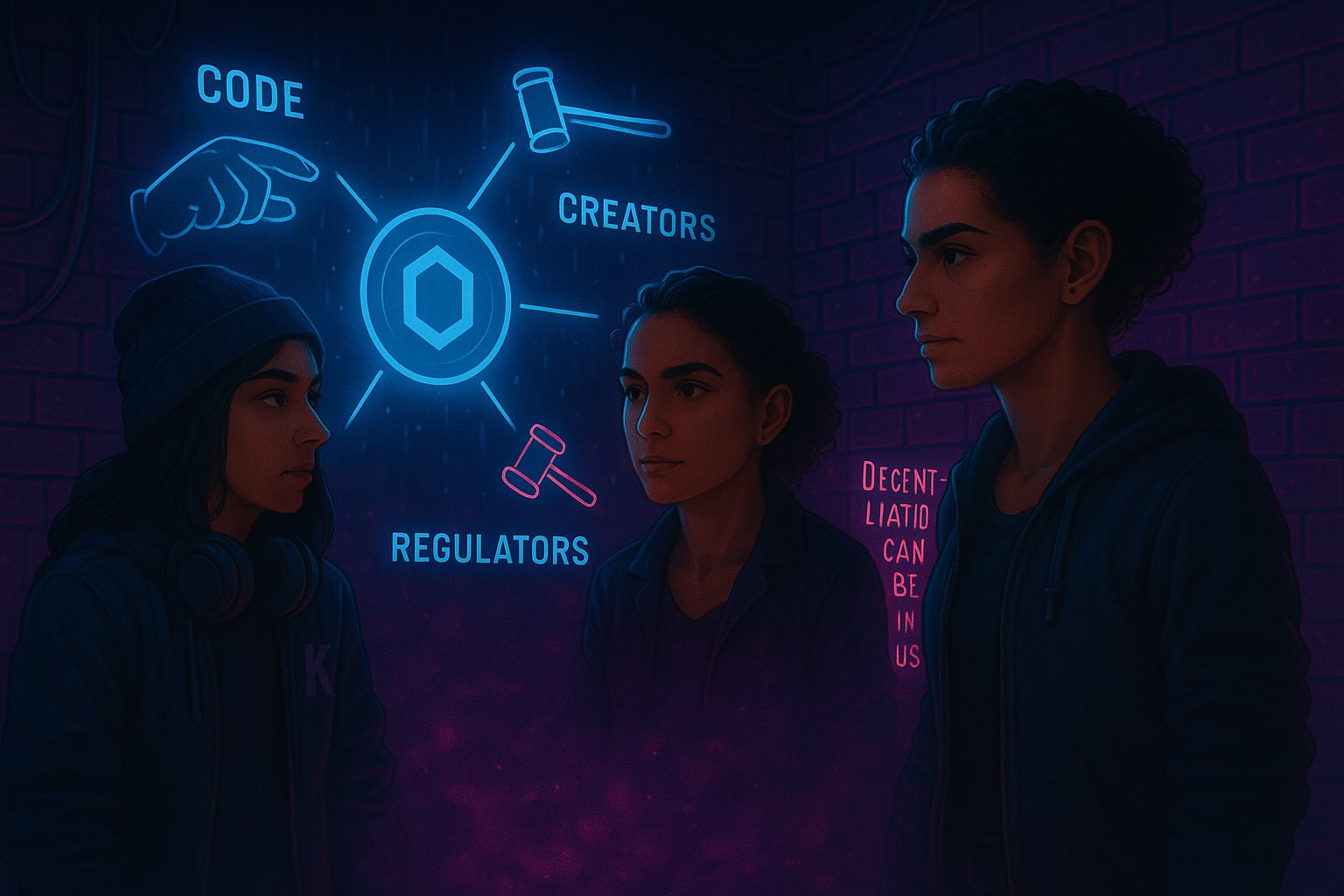
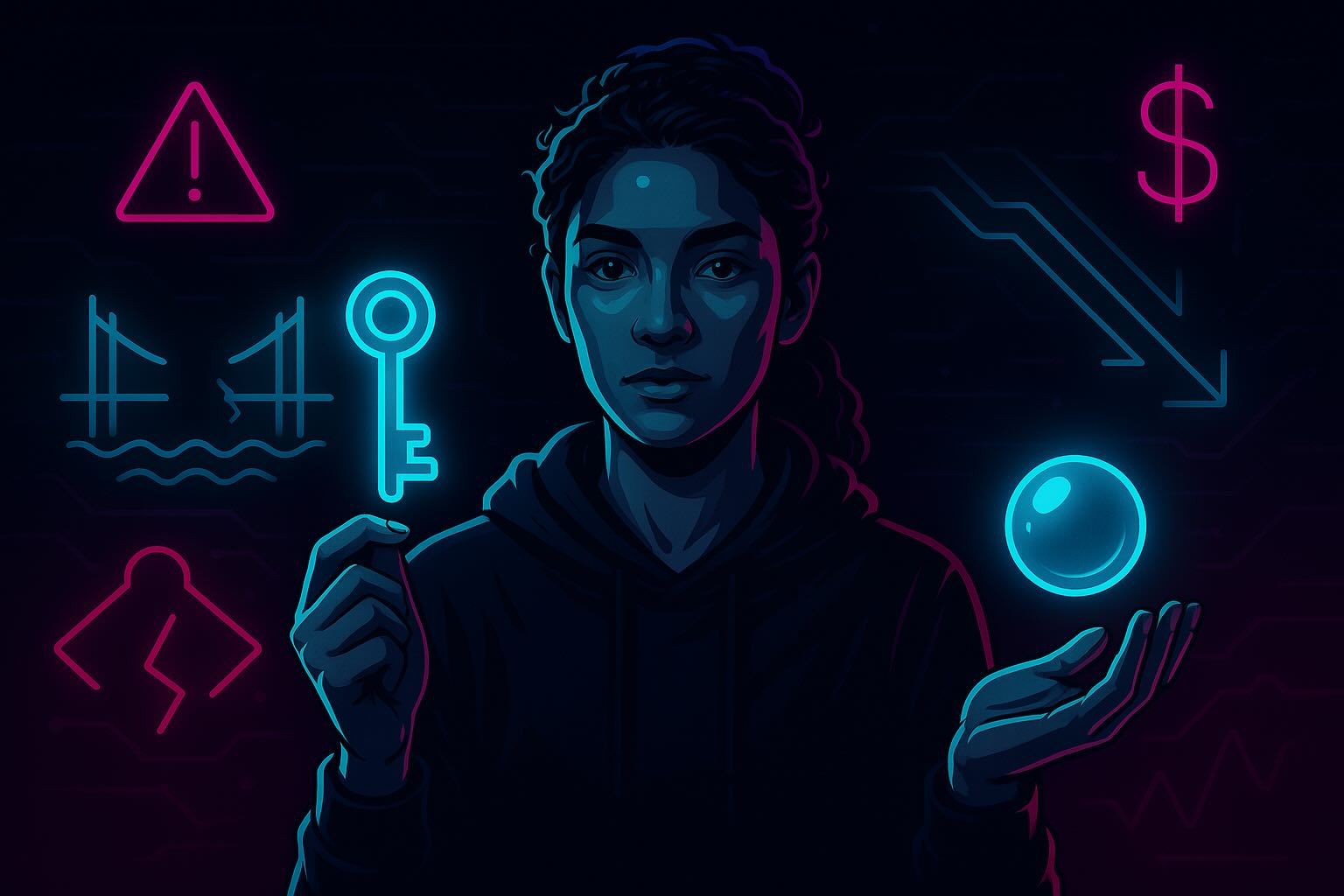
Lucia thought she finally had a grip on the surface.
What a token is.
Why it has a price.
How supply can be created — or faked.
But the deeper she looked, the more something unsettling became clear:
Tokens don’t just live in markets.
They live in systems of power.
Some claim immutability — yet can be rewritten.
Some claim decentralization — yet answer to a single key-holder.
Some say “code is law” — but laws still decide who wins in the real world.
If Part 1 was about understanding what tokens are,
Part 2 is about understanding what they’re up against —
and what they expose.
The questions now are no longer technical.
They are structural. Political. Philosophical.
Can something be “immutable” if someone still holds a lever?
Can something be “decentralized” if governments control the exits?
Can code alone replace trust — or just relocate it?
What happens when tokens collide with law, borders, and power?
Lucia wasn’t just learning how tokens work anymore.
She was learning what they reveal —
about money, control, and the stories we were taught to accept without question.
And so the dialogue continued.
The screen buzzed with headlines. Lucia scrolled past another bold claim:
“On the blockchain, nothing can ever be changed.”
She frowned and turned to Eunha.
“I keep seeing this everywhere,” she said. “People insist the blockchain is immutable — that once something is written, it’s permanent. But then I see tokens frozen, contracts upgraded, new coins minted out of nowhere. Isn’t that a contradiction? Either it can’t be changed, or it can.”
Eunha leaned back, her tone steady.
“Your question is the right one. The problem is not the claim — it’s the missing context. At the level of the blockchain itself — the chain of blocks — the statement is mostly true. Once a block is confirmed and buried under many others, rewriting it would require controlling most of the network’s power. That is nearly impossible. The past, once recorded, is resistant to change.”
“So the past is locked,” Lucia said. “That part is immutable.”
“Yes,” Eunha nodded. “But tokens don’t live in the past. They live inside smart contracts — programs deployed on the chain. And those programs can be written in many ways. Some are final: no one can alter them once deployed. Others contain levers — admin keys, upgrade paths, pause switches. Those levers are invisible to newcomers, but decisive in practice.”
Lucia’s eyes narrowed.
“So when someone says ‘immutable,’ they might be talking about the blockchain itself — but not about the tokens built on it.”
“Exactly. The chain records faithfully,” Eunha said. “But what it records may still be changeable, if the contract was designed with control built in.”
Lucia tapped her screen, frustration rising.
“Then show me. How can tokens be changed if the ledger itself can’t?”
“There are several ways,” Eunha said. “Let me name a few.”
She began to list them, one by one.
“Admin keys: built-in permissions that let the creator mint more tokens, freeze transfers, or seize balances.
Proxy contracts: instead of deploying code once and forever, the contract points to an underlying program that can be swapped later — allowing upgrades, and back doors.
Pausable functions: a circuit breaker that lets an administrator halt transfers entirely.
Governance controls: in some systems, large token holders can vote to change parameters. That power isn’t individual, but it’s still mutable.”
Lucia’s voice sharpened.
“So the blockchain doesn’t stop any of this. It enforces it. If the code says ‘an admin can mint,’ the chain will obey — even if it betrays users.”
“Exactly,” Eunha said. “The chain never lies. But it may enforce a lie, faithfully and forever.”
Lucia was quiet for a moment, then pressed harder.
“Then why do developers keep those powers at all? If immutability is the dream, why leave the keys in place?”
“They give reasons,” Eunha replied. “Some say: bugs exist, and upgradeability provides safety. Others say: regulators may require intervention. Some argue projects must evolve — and evolution requires control. These reasons can be honest. But they can also be excuses to keep power.”
“And users believe the word immutable,” Lucia said, “even if it’s only half-true.”
“Yes,” Eunha said. “Because slogans are easier than nuance. ‘Immutable’ sounds like safety — like permanence. Few newcomers ever read the contract or inspect the functions. They see the word and assume it applies everywhere.”
Lucia leaned in.
“But what about when immutability itself becomes the problem? If a contract has a bug and no one can fix it, doesn’t immutability become a danger, not a shield?”
“It can,” Eunha said. “Pure immutability is unforgiving. The DAO hack in Ethereum’s early days is the clearest example: a flaw in the code let an attacker drain funds. The contract did exactly what it was written to do, not what people intended. Immutability meant the bug was law. To reverse it, the community had to hard fork the chain — splitting Ethereum in two.”
Lucia winced.
“So immutability isn’t always strength. It can also be brittleness. Too rigid to correct mistakes.”
“Exactly. That’s the paradox. If you want flexibility, you must allow control. If you want immutability, you must accept risk. Most projects compromise — but few admit how much power they keep in the process.”
Lucia’s voice grew low, almost reflective.
“So immutability isn’t binary. It’s a spectrum. On one end, Bitcoin — no admin, no upgrade, no pause. On the other, tokens where one insider holds a master key, rewriting balances at will. And in between, every shade of partial trust — all of it called ‘immutable.’”
“You see it,” Eunha said. “Immutability is not a guarantee. It is a condition to be verified. It demands the question: Who can still change the rules? Without that question, the word is empty.”
Lucia looked back at the charts, but they no longer held her attention. The real danger wasn’t in price. It was in the unseen levers behind the screen.
“Then every time I hear the word immutable, I should ask: immutable against what? Immutable for whom? Immutable until which key is turned?”
“Exactly,” Eunha said. “The blockchain’s history is near-immutable. But tokens are only as immutable as their design. The wise don’t repeat the slogan — they inspect the rules, and the power behind them.”
Mini-takeaway:
Immutability is not absolute. The blockchain’s history is hard to change, but tokens live in contracts — and contracts may include admin keys, proxy upgrades, pause functions, or governance levers. Pure immutability is rare. Most tokens sit somewhere between rigidity and control. To see clearly, always ask: Who can still change the rules — and how?
Lucia closed the laptop for a moment. The room fell quiet, but her thoughts didn’t. The charts had stopped moving, but the questions hadn’t.
“I keep circling back to the same worry,” she said. “Governments already control money. They decide how much exists. They regulate banks. They tax transactions. They can freeze accounts. Why would tokens be any different? Why can’t governments just shut it all down?”
Eunha’s voice stayed calm, but it carried weight.
“Because control is not absolute,” she said. “Governments can outlaw, restrict, regulate — but they cannot erase the existence of decentralized networks. Bitcoin, Ethereum — these aren’t servers in a building. They’re thousands of nodes spread across the world. To erase them, a government would have to switch off the internet itself.”
Lucia narrowed her eyes.
“But we don’t live inside blockchains. We live in the real world. If I can’t spend a token at a shop, or exchange it for money in my bank, what good is it? Doesn’t that mean governments still win?”
“Here you’re touching the heart of the issue,” Eunha said. “Tokens are strongest inside their networks. No one can alter the ledger. No one can inflate the supply without consensus. But at the borders — where tokens meet fiat — governments still have power. They control the on-ramps and off-ramps: exchanges, banks, payment companies. They can demand KYC, freeze withdrawals, blacklist addresses. They can’t break the code, but they can choke its use.”
Lucia drummed her fingers, frustration deepening.
“So decentralization is a half-truth,” she said. “On paper it’s freedom — but in practice the state just waits at the exit. If I can’t convert, if I can’t spend it openly, isn’t it all just an illusion?”
“Not illusion,” Eunha replied. “Tension. Think of cash. Governments control banking systems — yet black markets still run on paper money, because physical cash resists surveillance. Tokens are similar. They can be banned, but they go underground. They can be taxed, but they can move peer-to-peer across borders. They don’t erase governments — and governments can’t erase them either.”
Lucia tilted her head.
“Then why haven’t more governments already crushed them? If tokens are so disruptive, why let them exist at all?”
“Because power moves in more than one direction,” Eunha said. “Some governments see tokens as innovation — a way to attract capital and talent. Others treat them as laboratories: open experiments they can study, copy, or absorb. Some simply lack the technical or legal ability to enforce bans. And others realize that regulation, not destruction, gives them more control.”
Lucia raised an eyebrow.
“Regulation. That word is everywhere. But what does it actually mean for tokens? Taxes? Bans? Licensing? What shape does it take?”
“All of those,” Eunha said. “In Europe, the MiCA framework classifies tokens — stablecoins, utility tokens, asset-backed tokens — and demands disclosures, audits, reserves. In the U.S., the debate is fragmented: the SEC claims many tokens are securities, others argue they’re commodities. Stablecoins face the tightest grip, because they compete with government money. Everywhere, regulation is code for surveillance — KYC, AML, traceability. The more tokens touch the fiat world, the more the state insists on control.”
Lucia’s tone hardened.
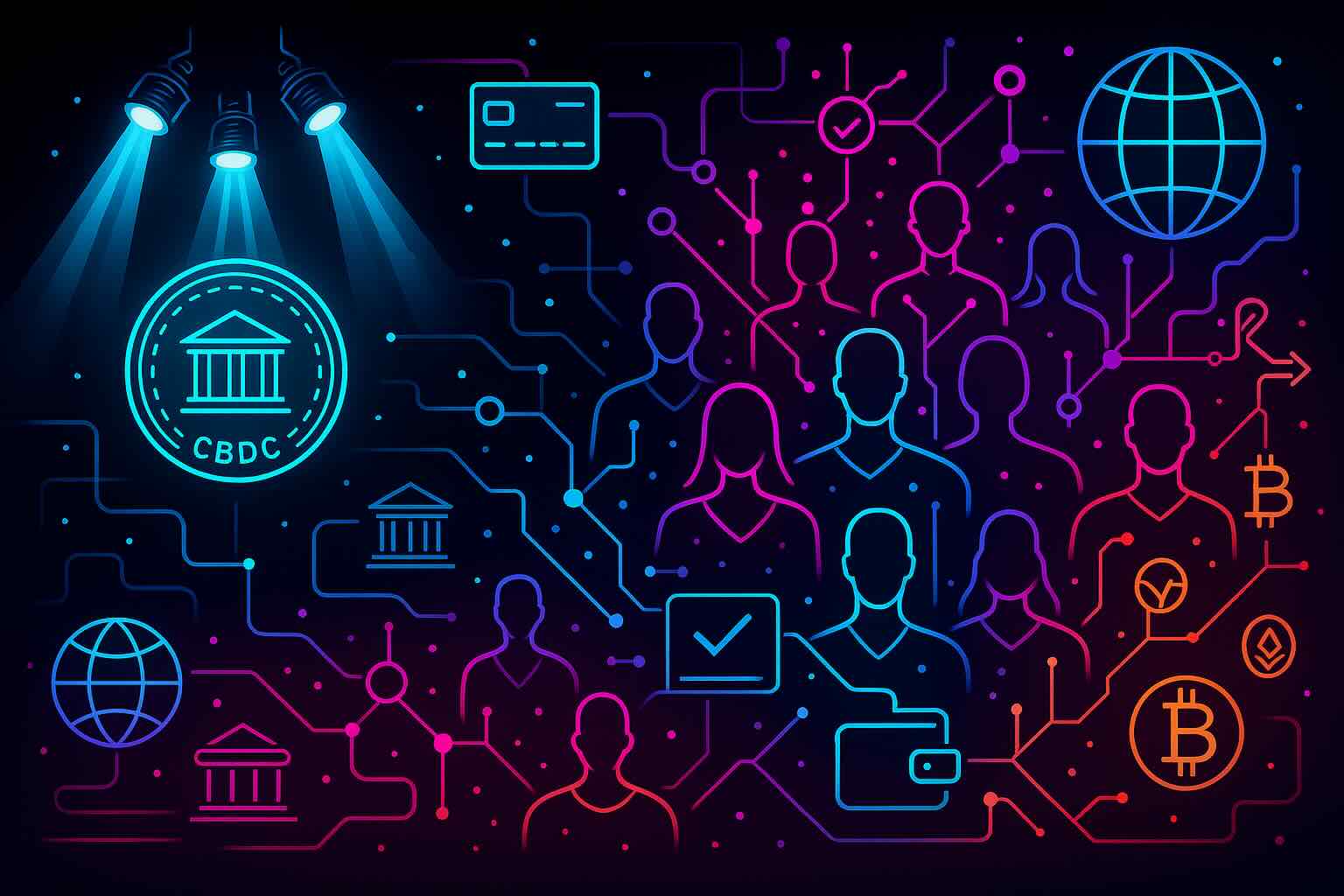
“And what about CBDCs? Central Bank Digital Currencies. Aren’t they just governments taking the tech and keeping all the power?”
“CBDCs are the mirror opposite of tokens,” Eunha said. “Where tokens try to decentralize, CBDCs centralize completely. They adopt blockchain mechanics — programmability, instant settlement, audit trails — but strip away freedom. With a CBDC, every transaction is visible to the state. Money can be frozen, expired, geo-restricted. Tokens tried to escape authority. CBDCs embed authority deeper.”
Lucia leaned forward, eyes sharp.
“So tokens are just fuel for the state’s next machine. People thought they were building freedom — but governments are harvesting the same tools to build surveillance. Isn’t that defeat?”
“Not defeat,” Eunha said. “Dialectic. Every new tool reshapes power in both directions. The internet empowered individuals — and also surveillance states. Encryption protected privacy — and also intelligence agencies. Tokens unlock new possibilities for freedom — and new instruments for control. The question isn’t ‘who wins?’ — it’s who adapts faster.”
Lucia went quiet, then spoke softly.
“But what about me? An ordinary person. If governments demand taxes, if exchanges require IDs, if banks block withdrawals — do I really have decentralization left?”
“Inside the system, no,” Eunha said. “But peer-to-peer, outside exchanges, autonomy still exists. If you and someone else agree, no government can stop you from sending a token directly. The chain will confirm the transaction. That freedom is fragile. Sometimes inconvenient. Sometimes punished. But it remains. Decentralization is not a blanket of protection. It’s a door that stays open — even when every hallway around it is walled.”
Lucia’s voice grew reflective.
“So decentralization isn’t perfection. It doesn’t erase power. It doesn’t make me untouchable. What it gives is persistence — the ability to survive pressure, to move underground, to exist in parallel.”
“Yes,” Eunha said. “That’s its real meaning. Not invincibility — endurance. Governments can regulate, restrict, surveil. Tokens can adapt, fork, migrate, reappear. Neither side wins absolutely. Both evolve.”
Lucia leaned back slowly.
“Then tokens aren’t just code and markets. They’re political events. Each one is a negotiation — between networks and states, between freedom and control. And that negotiation never ends.”
“You’ve understood it,” Eunha said. “To study tokens is to study power. Code is the medium. Markets are the stage. Governments are the counterforce. Decentralization isn’t victory — it’s resistance.”
Mini-takeaway:
Governments cannot erase decentralized tokens, but they can choke them at the borders — banks, exchanges, payment rails. Decentralization resists, but it is fragile in practice. Regulation brings surveillance. CBDCs copy crypto’s architecture but invert its spirit. Tokens are not just code — they are contests of power, surviving not through perfection, but through persistence.
Lucia leaned back in her chair, rubbing her forehead.
“I still can’t place tokens,” she said. “They float. They don’t sit anywhere solid. If I think of money, I know it’s enforced by law. If I think of stocks, I know they tie back to a company. If I think of bonds, I know there’s a repayment contract. If I think of gold, I know it’s scarce in the ground. Tokens… they seem like shadows of all these things, but never fully any of them.”
She looked at Eunha.
“I need you to compare them directly. Piece by piece. Where do tokens mirror these assets — and where do they fail?”
Eunha nodded slowly.
“Then let’s begin with money. Tell me: what gives money its power?”
“The state,” Lucia replied. “Central banks issue it. Governments enforce it. Shops accept it because they have to. And taxes — I have to pay taxes in it. That keeps demand alive.”
“Good,” Eunha said. “Fiat money is not scarce. States can print more at will. But it is stable because authority compels its use. Tokens are different. No government forces anyone to accept them. They survive only by choice, by belief. Some tokens are designed to act like money — Bitcoin, for example: scarce, portable, global. But no court forces a shop to accept it. No law compels a debt to be settled in it. Its strength is freedom. Its weakness is fragility.”
Lucia frowned.
“So tokens can act like money, but they don’t have the state’s backbone. They live or die on voluntary belief. And belief can vanish.”
“Precisely,” Eunha said. “Tokens as money are experiments in voluntary consensus. They can work where faith endures. They collapse where faith fails.”
Lucia tapped the desk.
“And what about inflation? Governments print money endlessly. Bitcoin’s defenders say its fixed supply makes it superior. Is that fair?”
“It is both fair — and misleading,” Eunha replied. “Bitcoin’s supply is capped by code: twenty-one million, no more. That creates digital scarcity. But scarcity alone doesn’t make a currency. Stability matters too. Fiat inflates, yes — but governments can respond to crises, fund wars, stabilize banks. Bitcoin cannot flex. That rigidity is strength in theory — weakness in emergency. Money is not just numbers. It is also resilience.”
Lucia nodded, slowly.
“So Bitcoin may be the purest ‘token-as-money’ — but purity is not perfection. It trades adaptability for certainty.”
“Exactly.”
Lucia paused, then shifted.
“Alright. Then stocks. Stocks feel real — companies, workers, factories, profit. How do tokens compare?”
“A stock,” Eunha said, “is legal ownership. One share, one slice of the company. You may receive dividends. You may vote in shareholder meetings. The law enforces those rights. A token is not that. Unless it is explicitly bound by law, a token gives you no claim to profits, no legal recourse, no shareholder rights. Some projects call their tokens ‘governance shares,’ but those votes exist only in code, not in courts. They can be ignored, overridden, or made meaningless if insiders hold enough.”
Lucia shook her head.
“So when people say tokens are the new stocks, they’re really selling the image of ownership — without the rights.”
“Correct,” Eunha said. “A stock certificate comes with judges behind it. A governance token comes only with code — and sometimes, only marketing.”
“But what about tokenized stocks?” Lucia asked. “Teams claim to wrap Tesla or Apple shares as tokens. Isn’t that real?”
“Only if the wrapping is honest,” Eunha said. “A custodian must hold the real shares in a vault. The token is then a claim on those shares. But the risk is obvious: you are trusting the custodian. If they lie, the blockchain will still record your ownership faithfully — of nothing.”
Lucia exhaled sharply.
“So again: tokens can mirror stocks, but without law or trust, they’re just reflections. Sometimes accurate. Sometimes smoke.”
“Exactly.”
Lucia leaned forward.
“And bonds? Bonds seem simpler. I lend money, I get it back with interest. How can tokens pretend to be that?”
“Yet many do,” Eunha said. “Yield tokens. Lending protocols. Fixed-return promises. But bonds in the old world come with legal enforcement. If a government or company defaults, there are courts, bankruptcies, debt recovery. Tokens cannot promise that. A yield token only does what its contract allows. If the code fails, if the pool is drained, if insiders disappear — there is no courtroom.”
Lucia’s voice sharpened.
“So when a project says ‘guaranteed yield,’ the only thing guaranteed is that the code will execute — if nothing breaks, if no one exploits it, if no one drains the pool. But there is no guarantee in the traditional sense.”
“Correct,” Eunha said. “A bond rests on courts and law. A token rests on logic. Law can protect. Logic executes blindly — even if it ruins you.”
Lucia sighed.
“Then gold. Surely gold is the strongest comparison. People call Bitcoin ‘digital gold.’ Is that fair?”
“Gold is scarcity you can touch,” Eunha said. “It resists decay. It has thousands of years of monetary memory. Tokens like Bitcoin try to mimic that scarcity using math — twenty-one million, auditable by anyone. But scarcity in code is not the same as scarcity in geology. Gold cannot be printed. Bitcoin cannot either — unless the network changes its rules. Both claim permanence. Only one has physicality.”
Lucia considered this, then added:
“And what about gold’s neutrality? If I hold it, no one can freeze it. Tokens can be frozen if contracts allow, right?”
“Correct,” Eunha said. “Gold is a pure bearer asset: whoever holds it, owns it. Tokens can be bearer assets — but only if no admin key exists. If a token includes freeze or seizure functions, then your ‘digital gold’ is just digital custody pretending to be freedom.”
Lucia fell silent for a long moment, then spoke softly.
“So tokens borrow from everything — they echo money, stocks, bonds, gold — but they’re never fully those things. They are simulations. Sometimes honest. Sometimes fraudulent.”
“You see clearly,” Eunha said. “Tokens are mirrors. They reflect what they are coded to reflect. Some are honest mirrors, tied to reserves or working systems. Others are warped — showing the image of value, with nothing underneath. Both shine the same on a chart. Both are called tokens. The difference is invisible to anyone who never asks.”
Lucia leaned back, quiet now — but sharper than before.
“The real danger isn’t that tokens are nothing,” she said. “It’s that they can pretend to be anything. And most people never test the disguise.”
Eunha nodded.
“Exactly. The old world of assets anchored value in law, courts, states, or matter. Tokens replace those anchors with code. Sometimes the anchor holds. Sometimes it’s painted on. The only way to know is to ask: What is this token claiming to be — and does the design actually make it so?”
Mini-takeaway:
Tokens echo money, stocks, bonds, and gold — but they are never identical. They can mimic money without legal backing, stocks without rights, bonds without enforceable repayment, gold without physical weight. Their anchor is not law or matter, but code. Some are honest anchors. Many are not. To see clearly, always ask: What disguise is this token wearing — and does the code truly support the claim?
The screens around them still pulsed with numbers — green and red candles flashing in their endless rhythm. But the market’s noise felt muted now, drowned out by the weight of everything that had been uncovered.
Lucia leaned forward, her voice steady but searching.
“I’ve pressed you from every angle,” she said. “I’ve asked what tokens are, how price works, how supply is written, whether immutability is real, how governments push back, and how tokens compare to money, stocks, bonds, and gold. Every time, the answers have been layered, uncertain, complex.”
She paused.
“So I have to ask the hardest question: when everything is said and done… are tokens real? Or are they just illusions dressed as value?”
Eunha didn’t answer immediately. She watched Lucia for a long moment.
“They are real,” she said at last. “And they are illusions. Real, because they exist, because code enforces them, because markets trade them, because power fears them. Illusions, because their price is fragile, their promises often hollow, their meaning borrowed from older systems. They are both — and to see them clearly, you have to hold both truths at once.”
Lucia frowned.
“That sounds like a paradox. How can something be both real and illusion?”
“Consider money itself,” Eunha said. “A piece of paper, printed with numbers. Worthless by nature. Priceless by decree. Real in the marketplace — illusion in its substance. Consider stocks: certificates that promise ownership, but only as long as courts and regulators uphold them. Consider gold: trusted for five thousand years, yet still driven by belief. Every asset has illusion woven into its reality. Tokens are simply more honest about their fragility — because nothing disguises it.”
Lucia’s voice sharpened.
“Then why not abandon them? If they’re fragile, if scams and manipulation and regulation can crush them, why care? Why risk believing at all?”
“Because they open a door that cannot be closed,” Eunha said. “Before tokens, all money, all ownership, all credit lived inside institutions — banks, governments, courts. Now, there is an alternative. Imperfect, fragile, sometimes corrupted — but undeniable. A parallel system. Its very existence changes the old one.”
Lucia leaned back, eyes narrowing.
“So tokens matter not because they’re flawless, but because they challenge what came before. They expose that our systems aren’t natural laws — just choices we inherited.”
“Exactly,” Eunha said. “Tokens don’t give answers. They force questions. They strip away the assumptions we were trained never to notice:
— that governments must issue money,
— that companies must issue shares,
— that debt must require courts,
— that scarcity must come from the earth.
Tokens reveal that these were never laws of nature. Just conventions.”
Lucia was quiet for a long time.
“But what about decentralization?” she asked. “Everyone calls it freedom — but you’ve shown me it’s fragile. Blocked at the exits. Sometimes just a mask. Is decentralization real, or another illusion?”
“It is both,” Eunha said. “Decentralization is not perfection. It does not give you invulnerability. It gives persistence. A decentralized network may be surveilled, regulated, censored, taxed — but it does not vanish. When pressed, it forks. When banned, it goes underground. When attacked, it migrates. Decentralization is not freedom without risk — it is freedom that refuses to die.”
Lucia stared at the screen — her reflection faintly visible in the glass.
“So the lesson isn’t to worship tokens as saviors. And not to dismiss them as scams. The lesson is to see them for what they are: rules in code, shaped by belief, contested by power, fragile but persistent.”
“Yes,” Eunha said. “Tokens are not destiny. They are design. Some designs are fair. Some are predatory. All demand scrutiny. And in that scrutiny lies freedom — not freedom from risk, but freedom from deception.”
Lucia nodded slowly, the uncertainty in her voice replaced by clarity.
“Then the greatest danger isn’t the code, or the regulators, or the scams. The greatest danger is blindness — believing slogans, swallowing hype, mistaking the mask for the truth.”
“Exactly,” Eunha said. “To study tokens is to learn how to doubt — to ask, to inspect, to press. Every system — coins, stocks, debt, gold — hides illusion beneath its surface. Tokens make that illusion visible. That is their gift, and their warning.”
Lucia let the silence stretch. The chart continued its endless rise and fall, but it no longer looked like prophecy. Just movement. Just noise.
“This dialogue hasn’t taught me what to believe,” she said quietly. “It’s taught me how to see. How to peel away the language, the hype, the surface. How to look at the rules underneath. Maybe that’s the real lesson.”
“That is the lesson,” Eunha said. “Because tokens will change. Narratives will change. Governments will react. Markets will distort. New designs will rise. But the act of questioning — that is what survives. That is what keeps you free.”
Lucia gave a faint smile — not relieved, not triumphant, but awake.
“Then let’s keep questioning,” she said. “Because in this world, certainty is the lie. Only dialogue is real.”
Eunha closed her notebook.
And the room was quiet again — except for the steady hum of the chain, marching forward block by block, immutable and fragile, all at once.
Final Takeaway:
Tokens are not salvation, and not scams by nature. They are rules in code — sometimes fair, sometimes false, always contested. They echo money, stocks, bonds, and gold, but never perfectly. They are fragile against power, yet persistent against erasure. Their gift is not certainty, but the questions they force: What is money? Who controls supply? What makes value real? Who holds the keys? The answers shift. The questioning endures.