




































































Verified Platforms
Quick Links
Where to Stay Secure
Thank you! Your submission has been received!
Oops! Something went wrong while submitting the form.
Welcome to this Kodex walkthrough: The Door to Crypto — Part 1: Take Control of Your Crypto.
In this piece, you’ll learn what ownership actually means in crypto — not as a feeling, but as a key you hold.
By the end, you’ll know the difference between custodial and non-custodial control, and why your first real step isn’t buying — it’s holding your own door.
Where ownership begins — and what it really means to hold your own door.
The Table and the Key
The door to blockchains opens.
It’s quiet on the other side — the hum of screens, the faint scent of metal and dust, a single desk lamp casting soft light across the room.
Ava sits at the far end of the table, notebook open, sleeves rolled, pencil in hand.
She’s not a YouTuber, not an influencer — she’s a tutor at Kodex Academy, the one who teaches you how to handle the system before it handles you.
She looks up, eyes steady, a faint smile like she’s seen a hundred people cross this same line before you.
“Most people start crypto with a download and a rush,” she says.
“You start with your hands.”
She gestures lightly. “Hold them out.”
You do.
“Pretend there’s a key resting there,” she says.
“Not metal — twelve or twenty-four words, written once, remembered always.”
Her voice stays quiet, but the air shifts.
You look at your palms — empty, warm from the light — and try to imagine words heavy enough to unlock something as vast as a blockchain.
“That key isn’t a password,” Ava says. “It’s everything.
If you keep it safe, the door to blockchains opens — for you, and only you.
Lose it, and nothing — no helpdesk, no recovery form — can bring it back.
Share it, and it stops being yours the moment the words leave your hand.”
She lets the silence hang for a moment, then leans back slightly, watching your face.
You can feel it now — the weight of invisible responsibility pressing into your palms.
Ava nods, like that’s the reaction she was waiting for.
“That’s ownership,” she says softly. “Not excitement. Not hype. Just real.”
She turns the page in her notebook and begins to draw: three small shapes — a door, a bridge, and a switch.
“These,” she says, tapping the pencil once, “are the only three moves that matter when you deal with crypto.
You enter — when you hold your own key.
You cross — when you move value for the first time.
You close — when you take back the permission you gave.
That’s how you stop guessing and start owning.”
She lets the words settle.
The pencil rests between her fingers; her eyes stay on you, not the page.
“You’ll do all three before this lesson ends,” she says.
“And once you’ve done them, you’ll never see crypto the same way again.”
Custodial vs Non-Custodial
Ava draws a clean line through the small door sketch.
“Everything starts here,” she says. “Who really holds what you own?”
She splits the page in two.
Left side — someone else holds the key.
Right side — only you do.
“Most people live on the left,” she says.
“They forget a password, someone fixes it.
They lose access, someone resets it.
It’s easy — but it’s borrowed safety.
You don’t own the door, and you don’t own the house.
You’re just allowed to live there.”
She taps the left side once more.
“That’s the custodial world,” she says.
“Exchanges, apps, anyone holding your key for you.
It feels safe — not because you’re in control, but because someone else can undo your mistakes.
The same system that restores can also restrict — blocking access, freezing funds, rewriting the rules in silence.”
She taps the right side.
“This one’s heavier.
If you lose the words, no one can save you.
But when you unlock it for the first time, something shifts —
the sound, the stillness, the fact that no one else can touch it.
That’s what real ownership feels like.”
She underlines the right side.
“This is non-custodial,” she says.
“The key is yours, and the chain acts only on your command.
No one stands between you and what you decide to do.”
She pauses, then turns the page.
“When you want to move through that door,” she says, “you need something that can open it — a wallet.”
Ava shows where ownership becomes movement — and how awareness decides the shape of your control.
The Bridge
She slides the notebook toward you.
“Don’t just search for it,” she adds. “Go to the real home — bookmark it. That’s your first act of security.”
She scribbles three names in the margin: Rabby, MetaMask, and Trust Wallet.
Then she sketches a small rectangle.
“A wallet isn’t where your crypto lives,” she says.
“It’s the tool that holds your key — the bridge between you and the chain.
Without it, the door stays closed. With it, you can prove who you are and move what’s yours.”
“When you install one,” she continues, “start small. Use only the official site — Rabby, MetaMask, or Trust.
Write your seed phrase by hand before you click Next.”
She looks up to make sure you’re following.
“A wallet isn’t a place where crypto sits. It doesn’t hold coins in a box.
It holds the keys that tell the chain who you are and what you can move.
Every transaction, every transfer — it starts and ends with your wallet.”
She pauses to let that sink in.
“This,” she says, pointing to the rectangle, “is your instrument.
And like any instrument, you have to decide how you’ll play it.”
Hot vs Cold — Two Ways to Live
Then she writes two words beneath the drawing: Hot and Cold.
“These are the two ways a wallet can live,” she says.
“Hot is online — quick, alive, always connected.
Perfect for learning, for your first steps, for getting your hands used to the system.
But it’s exposed — like leaving your house unlocked because you think you’ll only be gone a minute.”
Her pencil moves to the second word.
“Cold is offline. Disconnected from the internet, untouched by pop-ups or noise.
You use it when your balance starts to matter — when curiosity becomes responsibility.
It’s slower, but safe in the way silence is safe.”
She lets the pencil rest on the page.
“Don’t overthink it,” she says. “It’s not about being perfect — it’s about being aware.”
She looks at you, measuring the space between curiosity and caution.
“If you’re here to learn, stay hot — a small wallet, a few dollars, something you can watch move.
You’ll feel how the system responds, how confirmations look, how control feels in your hands.
It’s your practice field.”
Then she taps the word Cold.
“If you’re here to protect something real,” she says, “go cold — paper, metal, or a device that never touches the internet.
That’s your vault — your quiet space, where nothing moves unless you move it.”
She underlines a short list on the page.
“Use only verified links,” she says. “Never search results. Never resellers.”
Ava’s Verified Cold Wallet Sources
🔒 Ledger — Official Site
🛡️ Trezor — Official Site
💳 SafePal — Official Site
Decision Point — The Door You Choose
She closes the notebook.
“Hot for motion,” she says. “Cold for protection.
Know the difference, and you’ll never panic when the noise starts.”
A faint smile.
“Most people think security comes from tools,” she says.
“It doesn’t. It comes from you — and your rhythm.”
She writes one word on the page and underlines it twice: today.
“This isn’t forever,” she says.
“You’ll evolve, build habits, maybe even blend both.
But right now — choose how you’ll move today.
That’s the first moment you steer instead of drift.”
She leans back slightly.
“So decide,” she says. “Will you train with a hot wallet, or prepare a cold one?
Say it out loud — it helps make it real.”
She closes the notebook halfway, pencil balanced in the crease.
“That’s your door,” she says softly.
“Not an app — a choice.
Once you step through it, every move starts to mean something.”
Move value safely — and see your actions verified by the chain itself.
The Bridge
Ava turns a new page and sketches two short lines —
a shore on the left, a shore on the right —
and between them, a narrow strip of water.
“This,” she says, “is where most people hold their breath.
They send money and stare at the screen, waiting for something to happen.”
She looks up.
“But we don’t wait. We watch.”
She labels the left shore Bank and the right Wallet.
“The water between them,” she continues, “is the crossing.
You’ll use a ferry — a custodial exchange — to move small value from the old world into your own hands.”
She glances up.
“Custodial just means someone else still holds the key while you cross — it’s their rails, your ride,” she says.
“Perfect for the bridge, not the destination.”
She names them slowly, one by one: Binance. KuCoin. Coinbase. Bitget.
“Each one’s a little different,” she says.
“Binance moves fast and deep — wide pairs, global reach.
KuCoin gives you early access to tokens others don’t.
Coinbase keeps things clean and simple.
Bitget focuses on traders — structure, tools, control.”
She closes the marker cap.
“Big, boring, stable,” she adds with a small smile.
“You don’t need adventure here. You need rails that work.”
She draws four small boxes underneath, each underlined once.
“Use only verified sign-up links,” she says.
“No ads, no search results — just the source.”
Ava’s Verified Exchange Links
🔹 Binance — Official Site
🔹 Coinbase — Official Site
🔹 Bitget — Official Site
🔹 KuCoin — Official Site
She looks up again.
“When the page looks plain and official — no pop-ups, no countdowns — you’re in the right place.”
The Crossing: Proof Over Profit
You’ll start small — coffee money, not conviction.
Enough to feel the movement. Too little to fear it.
“The goal isn’t profit,” Ava says. “It’s proof.”
She taps the right shore — Wallet.
“You’ll open your door, copy your address, and send a tiny amount across the river. Then we watch what happens.”
Get Your Address
“Open your wallet app,” she says.
“Tap Receive, then Copy address.
That’s the string that identifies your door on the chain.”
You stare at the line of letters and numbers — your door in the new world.
Ava nods.
“That’s your home address out here. Every deposit, every withdrawal — it starts and ends there.
If one character changes, it’s a different house entirely.”
She traces a single character with her pencil.
“Check the first four and last four,” she says.
“Say them out loud before you paste.
That’s how you know the door is really yours.”
Choose the Right Network
You paste it carefully into the withdrawal form on the exchange.
Below it, a dropdown flashes with network names: Ethereum (ERC-20), TRC-20, BEP-20.
Ava’s pencil hovers over the first.
“Networks are like roads,” she says.
“Each has its own signs, speed limits, and exits.
Choose the wrong road, and your cargo disappears between cities.
You bought ETH — that means it lives on Ethereum.
So you take the Ethereum road. ERC-20. Always match token and network.”
“Pick Ethereum (ERC-20),” she says calmly.
“Ignore the cheaper one — it’s the wrong road.
Then type a tiny amount, five or ten euros, and press Withdraw.”
Watch the Crossing
You nod. Your thumb hovers over Send.
For a second, the air feels heavier.
The exchange shows a spinning icon: Processing…
Ava leans forward and opens a new tab.
“This,” she says, “is an explorer.
The public window into the chain itself — the one place where truth lives.”
The Explorer: Seeing Truth On-Chain
She types etherscan.io into the address bar.
“This is an explorer,” she says.
“It’s a public ledger — every transaction, every block, in open view.
No marketing, no filters, just time recorded as truth.”
She pastes your wallet address into the search field.
“Every chain has its own version,” she adds.
“This one listens to Ethereum.
Later, when you’re on other chains, the name changes — but the principle doesn’t.”
“Press Enter,” she says.
“You’ll see your transactions appear — newest on top.
Refresh until your line shows up.”
Read the Record
A plain white page appears, lists of transactions scrolling down.
It feels too technical — until one line glows faintly at the top.
Ava points.
“That’s you.”
The status reads Pending.
Seconds pass. Then it shifts — Success.
Beside it: a block number, a hash, a timestamp.
“That’s the chain speaking back,” she says softly.
“No middleman, no approval, no one to rewrite it.
That’s your proof — the record of your intent, sealed into time.”
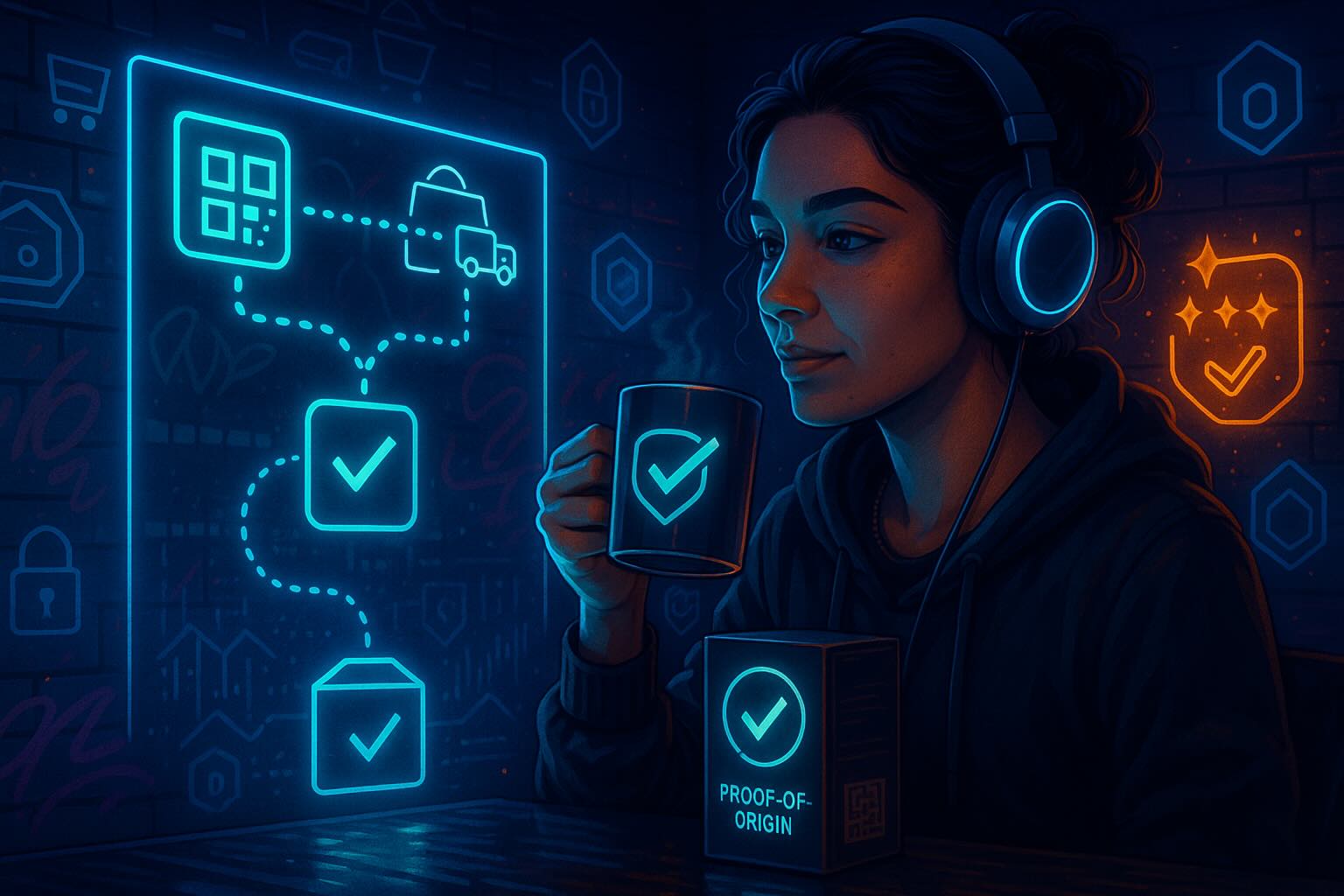
“Copy the transaction hash,” she says.
“It’s the chain’s receipt.
Save it in your notes next to the date — first habit of every real trader.”
You whisper the first six and last six characters under your breath, just like she taught.
Your pulse steadies.
The proof sits there — real, permanent, uneditable.
Ava watches you close the tab.
“That’s what the bridge teaches,” she says.
“The system keeps its word — and shows you the receipt.”
She stays quiet for a moment — the hum of the laptop fan the only sound.
Then she turns another page.
Seeing What’s Open
At the top, she draws a small switch — a simple line with two dots.
“This,” she says, “is what connects your wallet to the world. Every time you interact with a site or a smart contract, you flip one of these. It’s called an approval — permission for that site to move a specific token on your behalf.”
“You’ll see it when your wallet pops up and asks to connect,” she continues. “That’s the switch being offered. You decide whether it flips.”
She glances up, reading your face.
“Approvals aren’t bad,” she says. “They’re how things get done. But every open window is a draft — and every draft is a risk if you forget it’s open.”
Her pencil rests against the page.
“That’s why every clean trade ends with a check. If something can still move your tokens, it means the window’s still open.”
Connecting to the System
You tilt your screen slightly. She gestures for you to follow along.
“Here’s the good part,” she says. “You can see your windows — and you can close them.”
She opens a new browser tab: revoke.cash — the interface plain, almost boring.
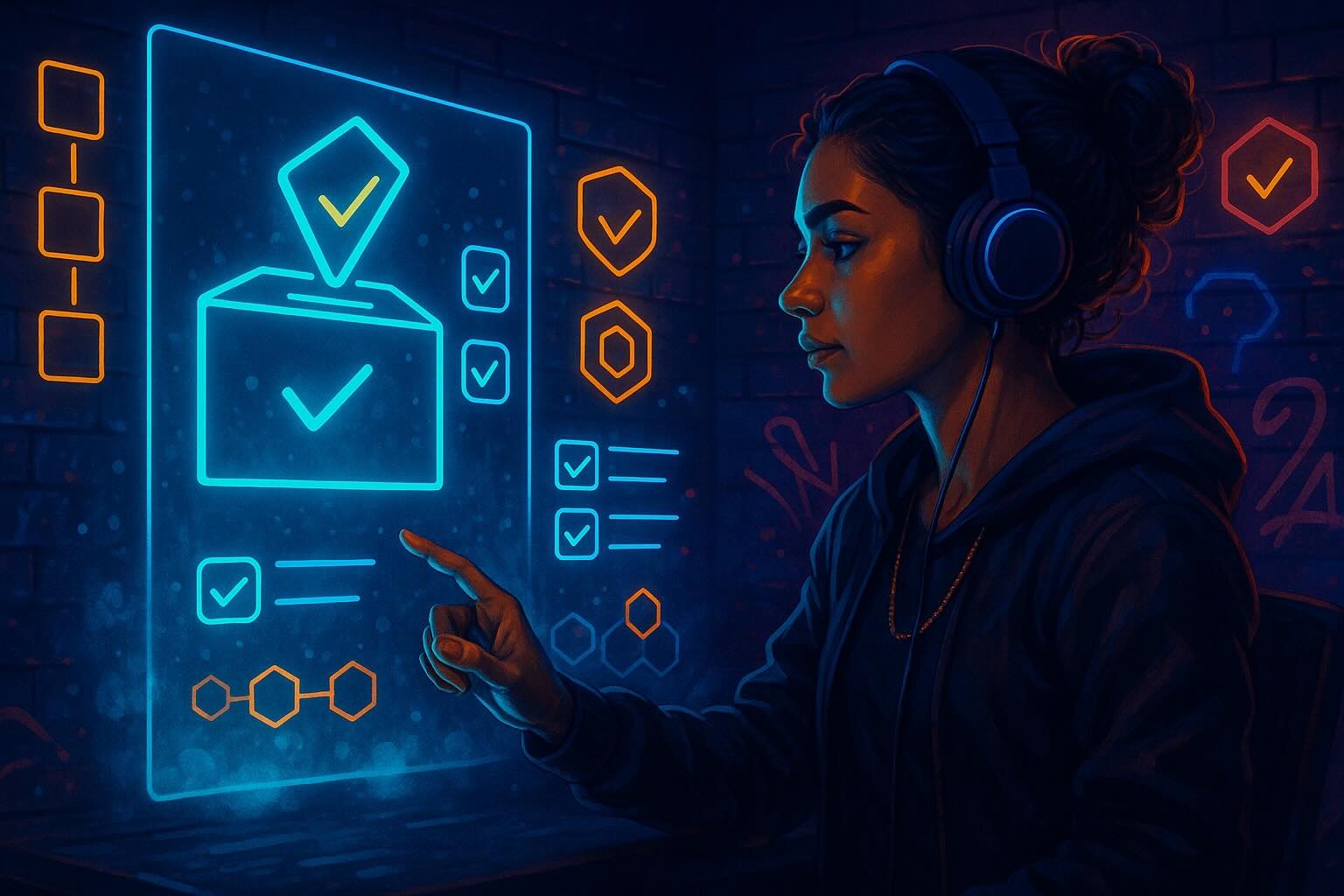
“This is a revoke tool,” she explains. “It scans your wallet for every permission you’ve granted — all the doors you’ve left ajar.”
“Open revoke.cash,” she says softly. “Connect the same wallet you used for the swap — Rabby, MetaMask, or Trust. Wait until your address appears in the top corner.”
Rows appear: token names, amounts, dates, and checkboxes marked Approved.
Ava points to one line.
“See that?” she says. “This contract still has access to your wallet — even though the swap’s done. Let’s close it.”
Closing What You Don’t Need
“Click Revoke beside that token,” she says. “Your wallet will ask to confirm a small transaction — just gas fees. Approve once.”
You click Revoke. A pop-up appears. You confirm.
Seconds later, the line disappears.
Ava nods.
“That’s it. The window closes. The draft stops. You just told the system, thanks — we’re done here.”
She waits for the list to refresh.
“Do the same for any contracts you don’t recognize,” she says. “Leave only the ones you use often. The rest can sleep.”
She leans back, folding her hands.
“That’s what power looks like in this space — not trading faster or guessing harder. Just knowing what’s open, what’s closed, and when to breathe.”
The Quiet That Follows
You glance at your screen — the explorer still open on one tab, the revoke page now empty.
For the first time, it feels quiet.
Ava caps her pencil and stands.
“Move small. Watch close. Leave clean.”
She looks at the two open tabs.
“Explorer shows the proof,” she says. “Revoke keeps it tidy. That’s the full rhythm — act, verify, close.”
She smiles — not approval, but recognition.
“The system is big,” she says, “but it listens.
The notebook closes with a soft click.
The seed is written. The door is built. The light in the room settles into something steady — less discovery, more design.
Ava doesn’t say congratulations. She just studies you for a moment, then slides the pencil back into place.
“What comes next,” she says, “isn’t theory. It’s proof.”
She gestures toward the quiet screen.
“Yesterday you learned what control means. Today, you’ll see what it looks like when it moves.”
Outside, the hum of the system continues — blocks being written, confirmations stacking, strangers trading value they can’t see.
Inside, only one thing matters now: whether your door opens clean.
Ava writes three words on a yellow note and leaves it beside your keyboard:
Swap. Mirror. Revoke.
“Every path,” she says softly, “has a rhythm. This is yours.”
The room falls quiet again — not like an ending, but like the breath before motion.