



















































































Verified Platforms
Quick Links
Where to Stay Secure
Thank you! Your submission has been received!
Oops! Something went wrong while submitting the form.


Something broke in the internet we use every day.
You could read everything → then suddenly create and participate → but the value you generated?
It never really belonged to you.
Web1 let you read.
Web2 let you build audiences, post, engage, hustle.
Web3 exists because participation still didn’t mean ownership—or fair capture of the value you create.
This isn’t about replacing the old web.
It’s about fixing what stopped making sense: creators locked in, value extracted upward, control centralized.
This short series shows why Web3 emerged as the structural answer—and how real people are now learning, contributing, building, and earning inside it today.
No shortcuts.
No moonshots.
Just clarity on the systems, the mechanics, and the actual paths that work in 2026.
Read slowly.
It connects—and it might change how you work online.
The internet did not fail.
It did exactly what its incentives rewarded.
The early internet carried a quiet, almost naive assumption: that openness would naturally lead to fairness, and that access would eventually balance power.
Anyone could publish.
Anyone could link.
Anyone could build.
This was not ideology.
It was architecture.
Protocols were open, standards were shared, and control was diffuse by default.
You did not need permission to exist online.
You did not need approval to distribute ideas.
You simply connected.
That openness did not guarantee quality or truth, but it did something more important:
it made power hard to hide.
Over time, that condition changed.
Not through conspiracy.
Not through malice.
Through optimization.
Web2 did not arrive as a takeover.
It arrived as a solution.
Hosting was complicated, so platforms simplified it.
Discovery was chaotic, so algorithms optimized it.
Publishing required effort, so interfaces removed friction.
Each step felt like progress.
But each step also moved something fundamental: control shifted from protocols to platforms.
The web did not become centralized because users wanted power to concentrate.
It centralized because centralization scales efficiency.
It lowers costs, reduces friction, and creates predictable environments for growth.
At small scale, this feels helpful.
At global scale, it becomes structural.
𓂀 Kodex Insight:
When platforms replace protocols, rules become private.
The moment platforms became infrastructure, participation became conditional.
Visibility depended on compliance.
Identity depended on continued approval.
Economic value became inseparable from the systems that hosted it.
This was not a betrayal of the internet’s promise.
It was its logical outcome under market pressure.
Web2 trained an entire generation to believe that digital services cost nothing.
In reality, they cost everything except money.
Attention became the unit of exchange.
Behavior became a resource.
Prediction became the product.
Every interaction fed a feedback loop designed not to inform, but to retain.
Systems optimized for engagement learned quickly that emotional intensity outperformed accuracy, and simplicity outperformed nuance.
This was not a moral failure.
It was an optimization problem.
⚠︎ Friction:
Systems that monetize attention inevitably distort behavior.
What changed was not just how information spread, but how reality was perceived.
Feeds replaced chronology.
Metrics replaced meaning.
Visibility replaced understanding.
The internet stopped reflecting society and began shaping it.
Perhaps the most misunderstood aspect of the modern internet is ownership.
Users were encouraged to create.
To post.
To build audiences and identities.
Over time, this effort accumulated into something that felt valuable.
But value without exit is not ownership.
Content could not move freely.
Audiences could not migrate intact.
Economic upside accrued upward, not outward.
Even creators who “succeeded” remained dependent on opaque systems they could not audit or influence.
◈ Ownership Check:
If your value disappears when you leave, it was never yours.
This was not hidden.
It was simply ignored because alternatives were inconvenient.
For years, the tradeoff held.
Convenience outweighed concern.
Scale outweighed sovereignty.
Growth masked fragility.
Then pressure increased.
Deplatforming exposed dependence.
Algorithm changes exposed precarity.
Monetization shifts exposed how little control users actually had.
The fracture was not sudden.
It was cumulative.
People began asking questions that had no answers inside existing structures:
Who owns identity online?
Who controls digital value?
Who decides the rules when platforms are the public square?
These questions were not ideological.
They were architectural.
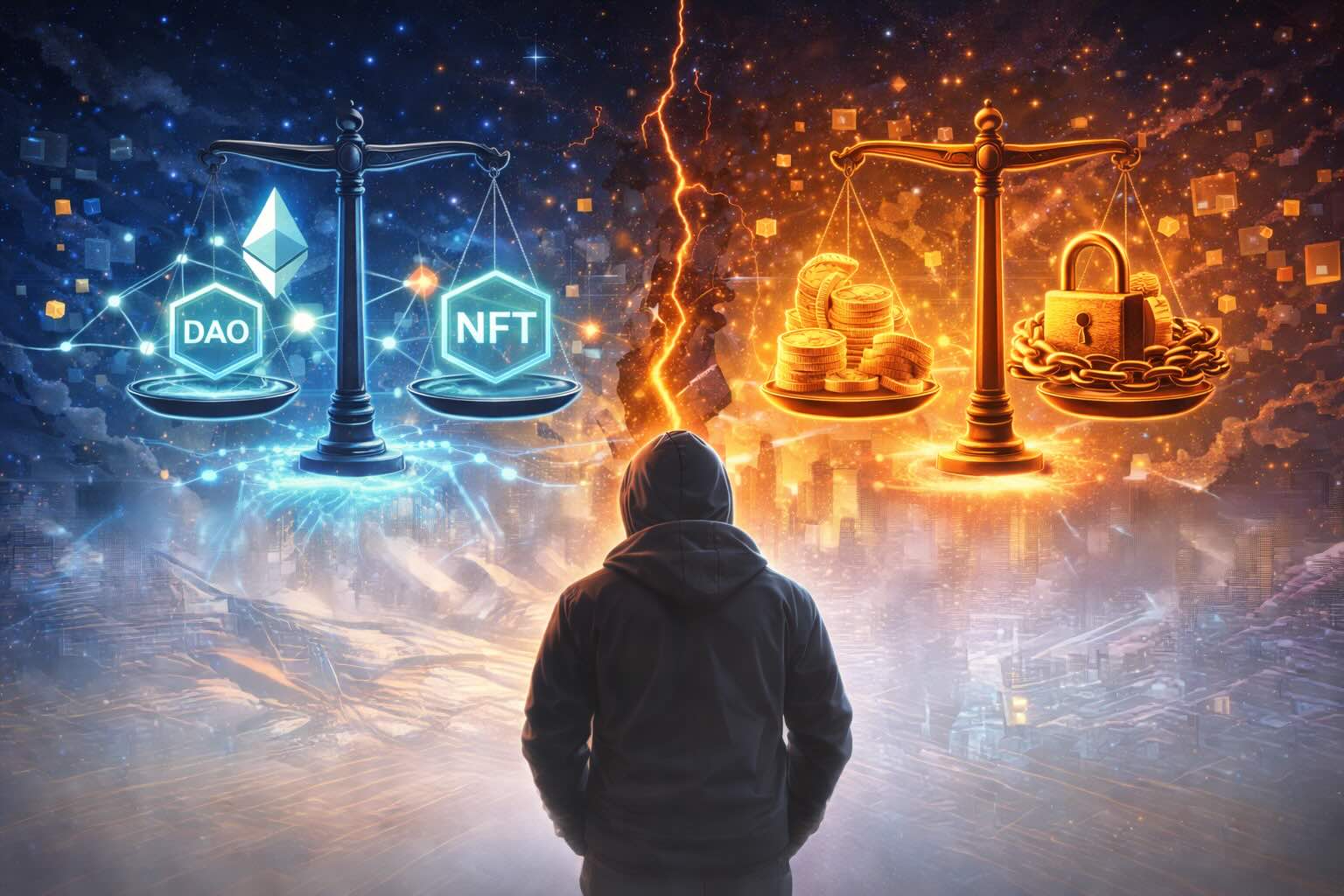
Web3 did not emerge to replace social networks, launch new coins, or create speculative markets.
It emerged because the existing architecture could not answer those questions.
Web3 begins with a different assumption: that power should be visible, contestable, and portable.
Not eliminated — but constrained by design rather than policy.
Instead of asking users to trust platforms, Web3 attempts to reduce the need for trust altogether.
Instead of hiding control behind interfaces, it encodes rules into shared systems.
Instead of vague ownership, it enforces explicit control.
⧖ This does not make systems fair.
It makes them legible.
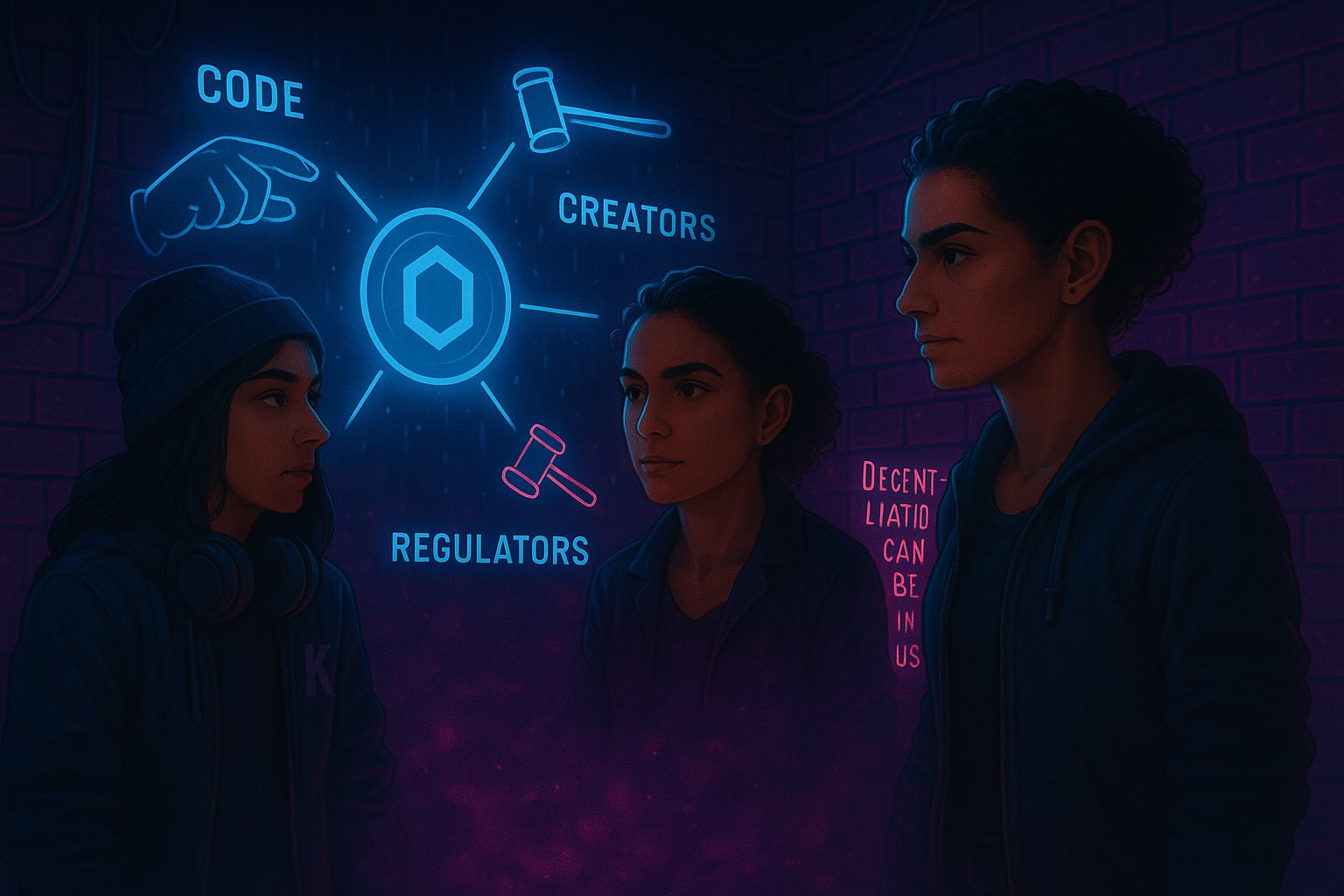
𓂀 Kodex Insight:
When power becomes explicit, responsibility follows.
Web3 is not the “next version” of the internet in the way Web2 replaced Web1.
It is a negotiation with the consequences of scale.
It asks whether systems can remain open under pressure.
Whether coordination can occur without capture.
Whether ownership can exist without permission.
It does not promise success.
It exposes tradeoffs.
⧉ Pause:
What would you accept less convenience for, if it meant more control?
That question did not matter before.
Now it does.
The fracture did not create Web3.
It revealed the need for it.
If trust can no longer be assumed, it must be engineered.
If ownership matters, it must be enforceable.
If power concentrates by default, it must be designed against — not wished away.
To understand whether this response is sufficient, we have to look beneath the surface.
Not at apps.
Not at narratives.
At machinery.
Blockchains, Crypto, and Code That Replaces Trust
Before you judge the system, you need to understand what it runs on.