









































































Verified Platforms
Quick Links
Where to Stay Secure
Thank you! Your submission has been received!
Oops! Something went wrong while submitting the form.


Impermanent loss isn’t a bug or a penalty.
It’s a structural effect that appears when liquidity meets a moving market.
In this walkthrough, Ava breaks down what impermanent loss actually is, where it comes from, and why it can occur even when prices move in your favor — before numbers, formulas, or yield ever enter the picture.
We start with structure, not fear.
Let's begin.
The Academy had settled into its evening silence.
Most screens were dark, corridors empty, the hum of servers soft as breath.
But in the observatory wing — where concepts were usually tested before they were taught — two desks still glowed.
One belonged to Tao.
Papers spread across the surface: diagrams of markets, notes from field research, half-scribbled translations meant for students across distant time zones. He was a tutor by nature — calm, thoughtful, always trying to make ideas accessible. But tonight, he looked unsettled, as if the knowledge in front of him kept slipping sideways.
Across from him sat Ava.
Quiet. Precise. A calm presence in the glass-blue light. She had the kind of mind that could walk inside a structure — any structure — and trace its skeleton with a single glance. Tao often said that speaking with her felt like being shown a map you didn’t know you’d been walking on.
Tonight, the map was giving him trouble.
The screen between them glowed with charts from a liquidity pool — green waves rising, red waves falling, numbers shifting just fast enough to be unnerving.
Tao exhaled slowly.
“I keep seeing this term everywhere,” he said. “Impermanent loss. LPs. Pools. Divergence. Symmetry. Everyone throws the words around like they’re obvious. But when I try to explain it to students — or even to myself — something doesn’t line up. I feel like I’m missing the real shape of it.”
Ava closed the notebook in front of her.
“That’s because most people meet impermanent loss after it has already hurt them,” she said. “They hear about high yield, easy rewards, passive income — and they step into a structure they don’t actually understand. Only later do they ask why their balance shrank even when the market moved in their favor.”
Tao frowned.
“So it’s not just a risk term. It’s a misunderstanding with consequences.”
“Exactly.” Ava’s voice was steady. “Impermanent loss isn’t a punishment. It’s a structural effect. A pool balancing itself against a market that refuses to stay still. If you don’t understand that, the numbers feel hostile. Confusing. Unfair. But once you understand the geometry of it — the way a pool holds its shape — the confusion dissolves. And the user sees why liquidity can be both a gift and a cost.”
Tao leaned back, absorbing her words.
“So the real danger isn’t the loss itself… it’s stepping in blind.”
Ava nodded.
“And the real benefit,” she added, “is that once someone understands it, liquidity stops feeling like a trap. It becomes a predictable structure — one you can engage with on purpose, not by accident.”
Tao lifted one of his pages, covered in crossed-out explanations.
“I tried to teach this earlier today. But I realized I didn’t understand it deeply enough to guide anyone. Maybe we should start from the beginning — not a lecture, just a conversation. You lead. I follow. We sharpen the edges together.”
Ava’s expression softened — a faint, knowing smile.
“A dialogue, then,” she said. “Your questions. My structure. We begin with nothing assumed. Not what a pool is, not what a token pair means, not why divergence creates tension inside the system. Step by step. Until the fog lifts.”
Tao glanced once more at the shifting chart on the screen — two tokens locked in a dance he didn’t yet understand.
“Good,” he said quietly. “Because if I feel this lost, our learners feel twice as lost. And I’d rather open the door for them than let them walk into a system that punishes confusion.”
Ava folded her hands.
“Then let’s open the door,” she said. “We start with the place where impermanent loss is born — the liquidity pool itself.”
The chart on the screen shifted again — two lines, two tokens, drifting slightly apart.
Tao traced the movement with his eyes, the way one curve rose while the other dipped.
“I understand price,” he murmured. “But why does the pool react like this? It looks… alive.”
Ava leaned forward, her elbows resting on the desk, her voice low enough to match the room’s hush.
“That’s because a liquidity pool isn’t a vault,” she said. “It’s not a bag of tokens waiting on a shelf. It’s a balancing mechanism. A structure that holds two assets in a precise relationship — a relationship that must remain intact, no matter what the market outside decides to do.”
Tao blinked.
“So the pool is constantly adjusting itself?”
“Yes,” Ava replied. “Two tokens, locked together. You deposit them in equal value — a pairing, a symmetry. And the moment you do, the pool begins its work: it must preserve that symmetry, even if the world outside refuses to cooperate.”
Tao studied the chart again.
The lines didn’t look like lines anymore. They looked like tension held in motion.
“I always thought liquidity meant making trades easier,” he said. “I never thought of it as… a structure under pressure.”
“That’s the part most people overlook,” Ava said. “Liquidity pools make markets smoother, faster, more efficient. They allow users to trade without waiting for someone else to take the other side. But convenience has a cost. The pool provides liquidity by bending — by rearranging itself so every trade keeps the ratio intact.”
Tao’s brows knit.
“So when someone buys one token from the pool… the pool must give it up and take more of the other one to stay balanced?”
“Exactly,” Ava said. “It’s mechanical. If people buy Token A, the pool ends up with less A and more B. If they sell A, the pool ends up with more A and less B. Always shifting, always holding the 50/50 value split. The pool never argues. It just reshapes itself.”
Tao tapped a finger against the desk, absorbing the idea.
“So every trade pushes the pool slightly off-center, and the pool pulls itself back into symmetry.”
Ava nodded.
“That’s the heart of it. And that balancing act — that relentless reshaping — is where the roots of impermanent loss begin. Not in loss. In symmetry.”
Tao let that word hang between them.
Symmetry.
Order inside motion.
A structure trying to stay whole while the world around it moves.
“That means,” Tao said slowly, “that liquidity providers don’t just deposit tokens. They enter into a relationship with a system that reacts to the market in real time.”
“Yes,” Ava said softly. “And that relationship is often misunderstood. People see the yield. They see rewards. They don’t see the pool’s shape tightening and loosening around their position. They don’t see how divergence on the outside forces redistribution on the inside.”
Tao felt a familiar shift — the moment when a concept begins to reveal its deeper architecture.
“So the real question isn’t why impermanent loss happens,” he said. “It’s why the pool must hold its shape in the first place.”
Ava’s eyes met his.
“Precisely. And once you understand why symmetry must be preserved, impermanent loss stops feeling like a mystery. It becomes a predictable outcome of a system doing exactly what it was designed to do.”
Tao nodded, his earlier uncertainty dissolving into curiosity.
“Then let’s follow the shape,” he said. “If the pool’s symmetry is the root, I want to understand the rule it follows — the geometry underneath.”
Ava reached for her notebook again, the faint scratch of the pen echoing in the quiet room.
“Then we move to the equation that governs every pool,” she said. “The rule that keeps the structure alive.”
She looked up.
“Next chapter: The Constant Product.”
The room felt even quieter now — as if the Academy itself leaned in, waiting for the next piece to fall into place.
Ava flipped open her notebook, revealing a single line written at the top of the page:
x · y = k
Tao stared at it.
Two variables. One constant.
Deceptively simple.
“This,” Ava said softly, “is the rule every liquidity pool lives by. A single equation that decides how much of each token the pool must hold at any moment. The pool’s symmetry isn’t a suggestion — it’s a law. And this law is its heartbeat.”
Tao leaned closer, tracing the symbol with his eyes.
“So x and y… the amounts of the two tokens?”
“Yes,” Ava replied. “Token A and Token B. Their quantities shift constantly as people trade against the pool. But no matter how violently the market moves outside, the product of those two amounts must stay equal to one thing — k, the constant.”
Tao exhaled.
“So the pool has one instruction:
‘Whatever happens, keep x times y equal to k.’”
Ava nodded.
“And that instruction forces the pool to bend. If one token is taken out, the other must increase in quantity to keep the equation balanced. If one side rises in market price, the pool must hold less of it. If one side falls, the pool must accumulate more.”
Tao’s expression shifted — curiosity turning into recognition.
“That means the pool never holds what the market holds. It always holds what the equation demands.”
“Exactly,” Ava said. “Most newcomers think liquidity providers earn yield while holding the same tokens they deposited. But that’s not true. The moment you enter the pool, you surrender your fixed position. The system begins moving your tokens for you, redistributing them to satisfy the constant product.”
Tao felt the weight of that.
A quiet, almost unsettling realization.
“So even before any loss appears… the pool is already shaping my position. Without asking.”
Ava folded her hands.
“It has to. If it doesn’t bend, the market breaks the pool. The equation is the only thing keeping trades fluid — and that fluidity is what liquidity providers get paid for.”
Tao let silence settle between them as he studied the page again.
x · y = k
A simple rule.
A relentless one.
“Then the pool doesn’t simply react to the market,” he said slowly. “It protects itself from the market by pulling the provider’s tokens into whatever shape the equation demands.”
Ava’s eyes warmed.
“Now you’re seeing it. And this is the moment most people never reach — the realization that liquidity provision isn’t passive at all. It’s collaborative. You and the system hold each other in place. And the strain of that collaboration is where impermanent loss begins to take form.”
Tao sat back, almost breathless from the clarity unfolding.
“So Impermanent Loss (IL) isn’t a glitch.
It isn’t a punishment.
It’s the shadow cast by this equation.”
Ava nodded once.
“When prices diverge outside the pool, the equation forces the pool to move inside. That movement shifts your balance away from what you would have held outside it. And the gap between those two realities — your redistributed liquidity vs your untouched tokens — is where the loss emerges.”
Tao closed his eyes briefly.
The pool wasn’t random.
It wasn’t unfair.
It was obedient — to a rule so strict it bent everything around it.
When he opened his eyes again, the chart on the screen looked different.
Less chaotic.
More like a system breathing under constraint.
“What’s next?” he asked quietly.
Ava turned the page.
A new heading waited there like a doorway.
“Divergence — When the Outside World Pulls the Pool Apart.”
She tapped the title once with her pen.
“Next chapter,” she said. “We study the moment the market and the pool fall out of alignment — and why that fracture is the birthplace of impermanent loss.”
The night deepened outside the Observatory wing — a dark, quiet canvas behind the glass.
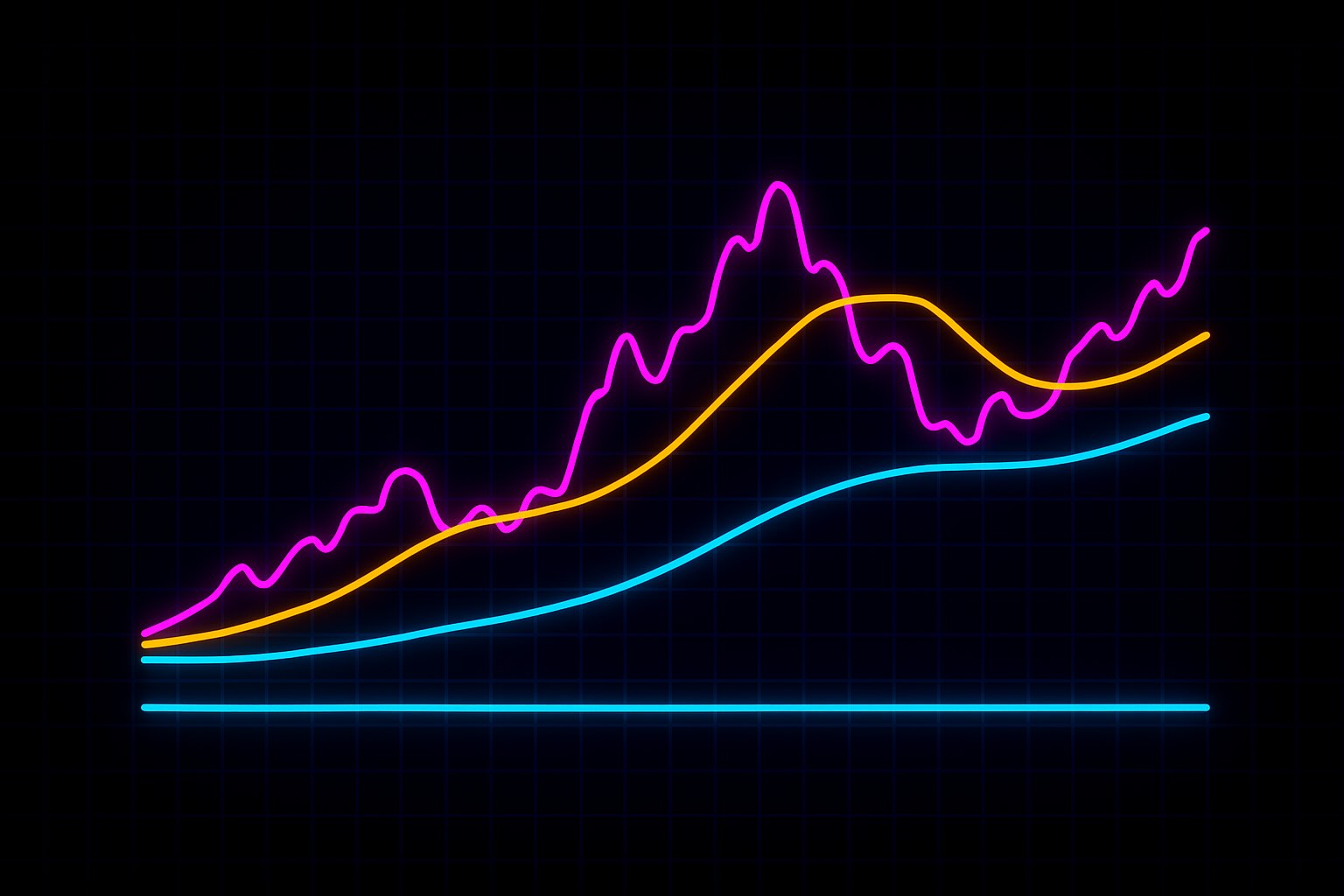
Inside, the glow of the screen painted the room in shifting colors, the chart now a pair of curves inching away from one another.
Tao watched the lines separate.
There was something strangely human about the motion — two signals that once moved together now pulling apart, as if disagreement had entered the system.
He frowned.
“Ava,” he said softly, “this part… this gap between the curves… it feels important. Is this the divergence you meant?”
Ava stepped closer, her presence steady as a metronome.
“Yes,” she said. “Divergence is the moment the outside world refuses to stay aligned with the pool. The moment the market decides one token is worth more — or less — than before. And when that happens, the symmetry inside the pool is threatened.”
Tao leaned in, absorbing every word.
“Show me,” he whispered.
Ava pointed toward the rising curve.
“Imagine Token A climbs in price outside the pool,” she said. “The world sees it as more valuable. Buyers rush in. Traders want more A. And because the liquidity pool can’t create value from nothing, it responds the only way it can — by giving up A and taking in B. Every trade pushes the pool further into holding the cheaper token.”
Tao’s eyes widened, the realization creeping in.
“So while the outside world rewards Token A… the pool pushes me to hold less of it.”
“Yes,” Ava said. “Because the equation demands it. And the faster the market pulls one token upward, the faster the pool must reshape your balance to maintain its constant product. Divergence creates pressure. The pool absorbs it. And you — as the liquidity provider — absorb the consequences.”
Tao turned his attention to the lower curve — Token B sinking slightly.
“And if B falls…?”
Ava nodded.
“The pool will accumulate more of it. It has to. The market rejects B, but the pool cannot reject anything. It must hold value symmetry. So when B loses value, you end up holding more of it. And less of whatever is gaining strength.”
Tao felt the concept tightening around him — a quiet, inevitable geometry.
“So divergence,” he said slowly, “isn’t just a price difference. It’s a pull. A force. The outside world stretches the system, and the pool stretches me.”
Ava’s voice softened.
“That is the truth most people never see. Divergence isn’t dramatic. It’s subtle. Slow. A widening gap between the world outside and the world inside. And the deeper that gap becomes, the more your position inside the pool drifts from what you would have held alone.”
Tao looked again at the chart — the two lines widening like a quiet conflict.
And then the realization struck him:
“So impermanent loss… begins when the market walks away from the pool.
Not because of volatility,
not because of risk,
but because the pool must obey a rule the market does not care about.”
Ava nodded.
“When the world diverges, the pool compensates.
And when the pool compensates, your balance shifts.
Impermanent loss is simply the difference between the tokens you would have kept and the tokens the equation requires you to hold.”
Tao took a slow breath, the pieces aligning in his mind.
“So divergence is the fracture.”
Ava smiled, not with triumph, but with recognition — the moment when a learner sees the shape behind the noise.
“Yes,” she said. “And now that we understand the fracture, we can study the shadow it casts. Because impermanent loss isn’t loss of value. It’s loss of alignment.”
She flipped the page in her notebook — the faint sound slicing through the silence.
A new title waited:
“Chapter 4 — The Shadow of Symmetry: Origins of Impermanent Loss.”
Ava closed the notebook gently.
“When you’re ready,” she said, “we follow the shadow to its source.”
The room felt suspended — as if even the air waited for the next truth to surface.
Tao sat forward, elbows on the desk, eyes fixed on the silent chart.
The two curves no longer looked like price movements.
They looked like two destinies stepping out of sync.
Ava watched him for a moment before speaking.
“Now that you understand divergence,” she said, “you’re ready to see the shadow it casts. Impermanent loss doesn’t appear out of nowhere. It isn’t an error or a glitch. It is the inevitable echo of symmetry inside a world that refuses to stay symmetrical.”
Tao’s breath caught — a small, instinctive reaction to a truth approaching.
“Show me the shadow,” he murmured.
Ava nodded and turned the notebook toward him.
No formulas this time.
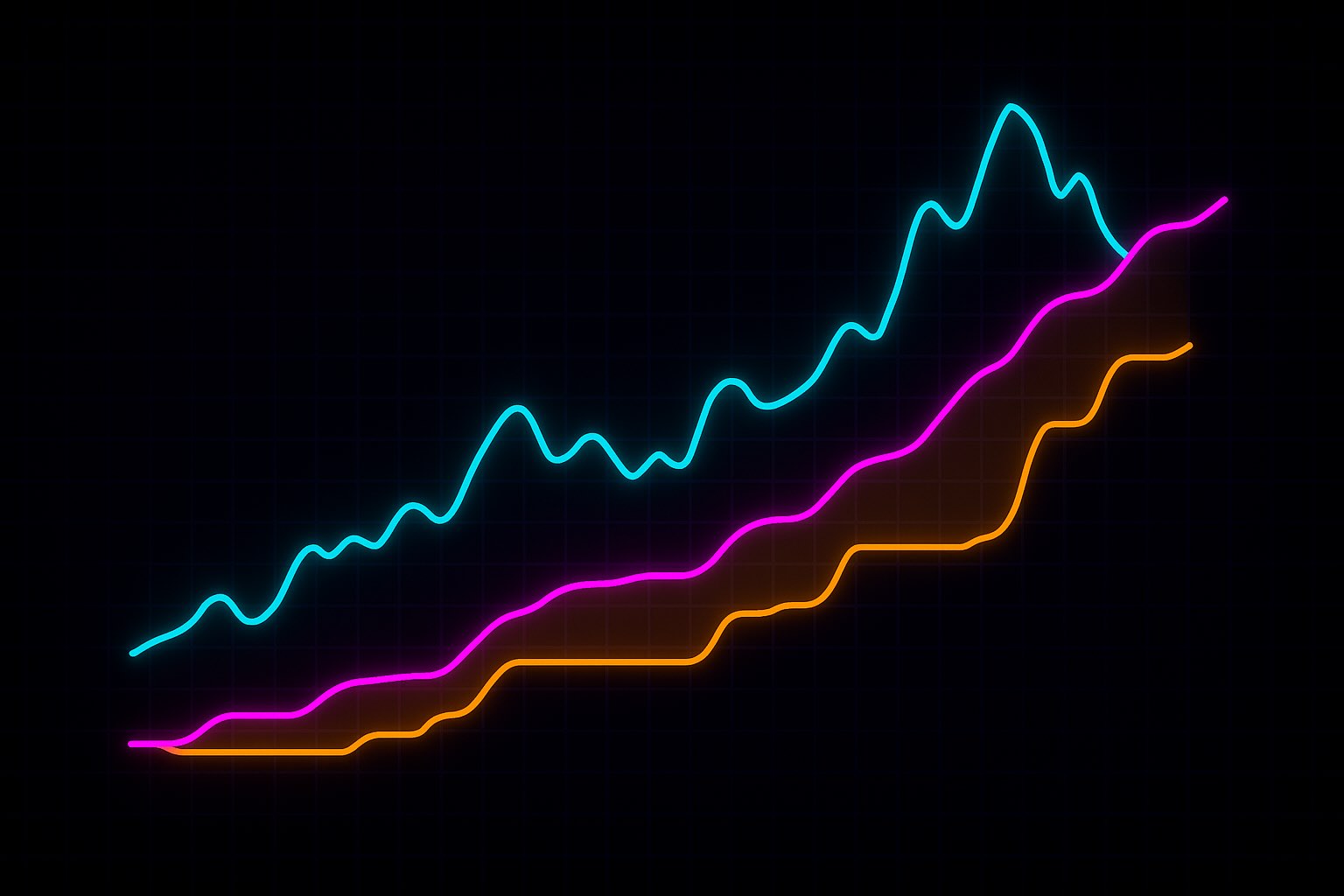
Only a simple diagram: two lines diverging, and beneath them, a faint shaded area — the difference between them.
“This shape,” she said, “is impermanent loss.”
Tao studied the drawing.
“It looks so… quiet.”
“That’s because IL doesn’t arrive with alarms,” Ava replied. “It doesn’t shout. It doesn’t warn. It appears softly, in the space between what the pool makes you hold and what you would have held outside it.”
She tapped the shaded region.
“This is the shadow of symmetry. When the market moves one way and the pool forces you to move another, a gap opens. Not a catastrophe — a gap. Impermanent loss is simply the measure of that gap.”
Tao frowned slightly.
“So it’s the difference between two paths. The path of the pool, and the path of the market.”
“Exactly. You entered the pool with a fixed idea of what your tokens were worth. But the moment divergence happens, the pool begins reshaping your position. It sells what is rising. It buys what is falling. Not because it’s wrong — because it must keep balance. But that balance comes with a cost.”
Tao’s voice dropped to a whisper.
“A cost hidden beneath the symmetry.”
“Yes,” Ava said. “The cost is not in losing tokens. It’s in losing what you would have had if the pool didn’t bend to the equation.”
Tao sat back, letting the meaning settle.
“So impermanent loss isn’t loss of value. It’s loss of alignment.”
Ava’s eyes warmed — the quiet recognition of a student stepping across a threshold.
“Correct. When Token A skyrockets, you hold less of it than you would have. When Token B collapses, you hold more of it than you want. Your position drifts away from the market’s logic. That drift is the shadow — subtle, persistent, structural.”
Tao glanced at the shaded diagram again, something clicking deeper than before.
“And the reason it’s called impermanent,” he said slowly, “is because the shadow disappears if the divergence closes — if the market returns to the old ratio.”
Ava nodded.
“Exactly. If the world returns to balance, the pool returns you to symmetry. The shadow dissolves. But markets rarely retrace perfectly. And so, for most providers, the shadow becomes permanent — not because the loss itself is irreversible, but because the divergence never truly closes.”
Tao exhaled, a long, steady breath.
“So impermanent loss is born not in chaos, but in order. The order of the pool pressing against the disorder of the market.”
Ava closed the notebook softly.
“And that,” she said, “is the truth people miss. Impermanent loss is the price of enabling liquidity. It is the quiet toll you pay for making a market smoother for others. Not a punishment — a structural consequence. And once you see the shadow clearly, you can understand why some pairs suffer more, some less, and why yield exists at all.”
Tao looked at the chart again, and for the first time, he didn’t see loss.
He saw a system doing exactly what it was built to do.
“What comes next?” he asked.
Ava opened to a new page — the heading precise, almost surgical.
The light in the room shifted. The diagram between them dimmed, but the shadow it revealed did not. Tao stared at it — the quiet space where value slipped into misalignment.
“I see the shadow,” he said. “But I don’t yet see what it means for someone inside it.”
Ava closed the notebook with a soft snap.
“You will,” she said. “Because the shadow only becomes real when the market moves. And that’s where we’re going next.”
She turned to the screen, where BTC and ETH pulsed in the dark like distant signals.
“Part 1 showed you the structure,” Ava said.
“Now watch what happens when the world pushes against it.”